
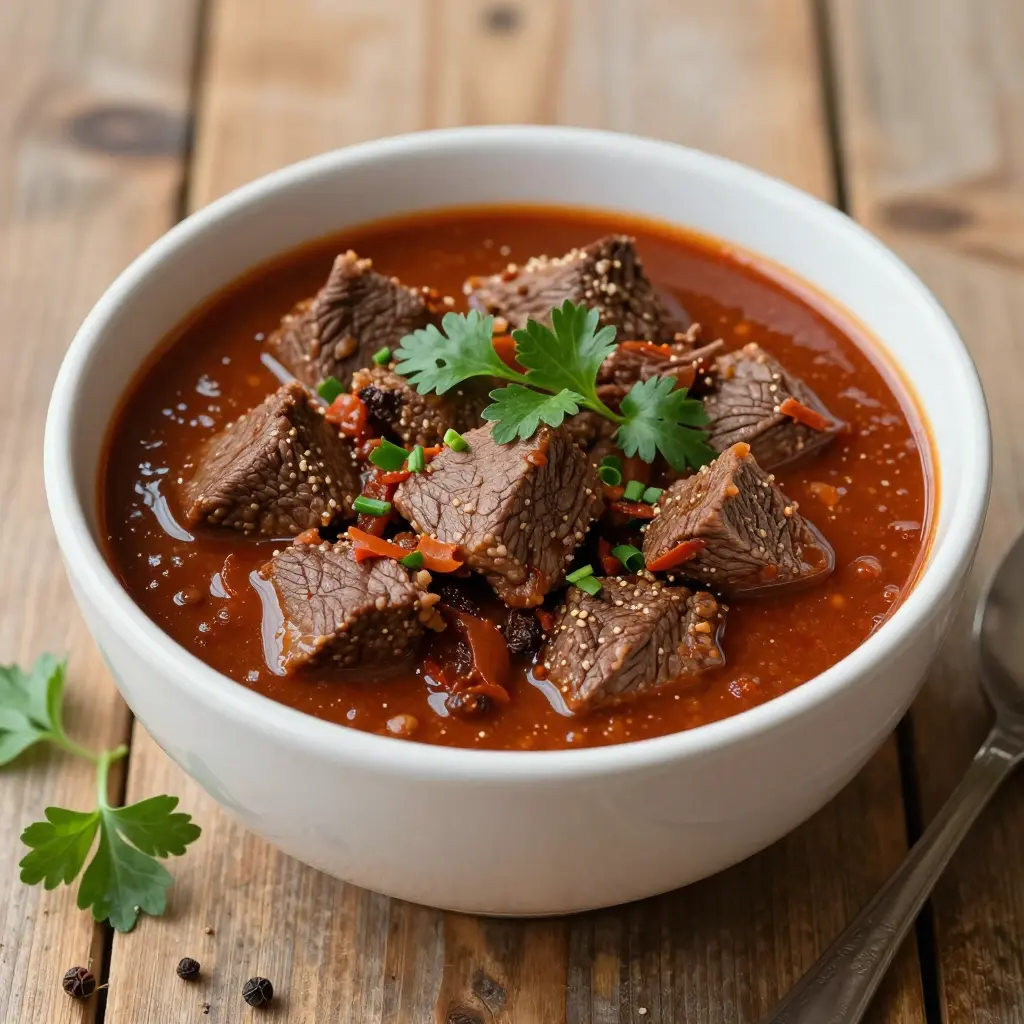
Two beef cuts hit the same hot pan and pick up the same Maillard sear. That crust is where the resemblance ends. Chuck turns fork-tender while sirloin stays firm and chewy.
That gap decides how a steak and beef chili recipe turns out far more than searing technique does. Cooks who know why one cut softens and the other does not stop blaming their pan and start choosing meat to suit the pot.
The explanation is in the meat, not the skillet. Collagen, muscle structure, fat distribution, and connective tissue each answer to heat differently, and every cut carries its own balance of them. Temperature, time, and moisture decide which trait wins out on the plate.
What follows covers how sirloin and chuck diverge under the same heat, why some cuts reward a long wet simmer while others want a fast sear, and how to pair each one with the method that suits it. For the whole technique in action, see this detailed steak and beef chili recipe.
Searing Science and the Maillard Reaction
When beef meets a hot pan, the first thing that happens is surface moisture boiling off. The surface cannot rise much above roughly 300°F until that water is gone, and only then does the Maillard reaction begin: amino acids and reducing sugars combine into hundreds of new flavor and aroma compounds. That is what produces the deep brown crust, plus the roasted, savory notes a simmer alone will not give you. All of it happens on the outside. During a fast sear, the interior barely changes.
Maillard browning flavors the exterior; it does not tenderize the interior. Tenderness comes from the cut and its connective tissue. Chuck carries plenty of collagen and tough muscle fibers, and long, slow cooking melts that collagen into gelatin. Sirloin holds less collagen and firmer fibers, so even a hard sear leaves it chewy through the center. The same crust tells you nothing about what the middle will do.
The diagram below shows the split. Both cubes wear the same thin browned layer on the outside; the difference is underneath.
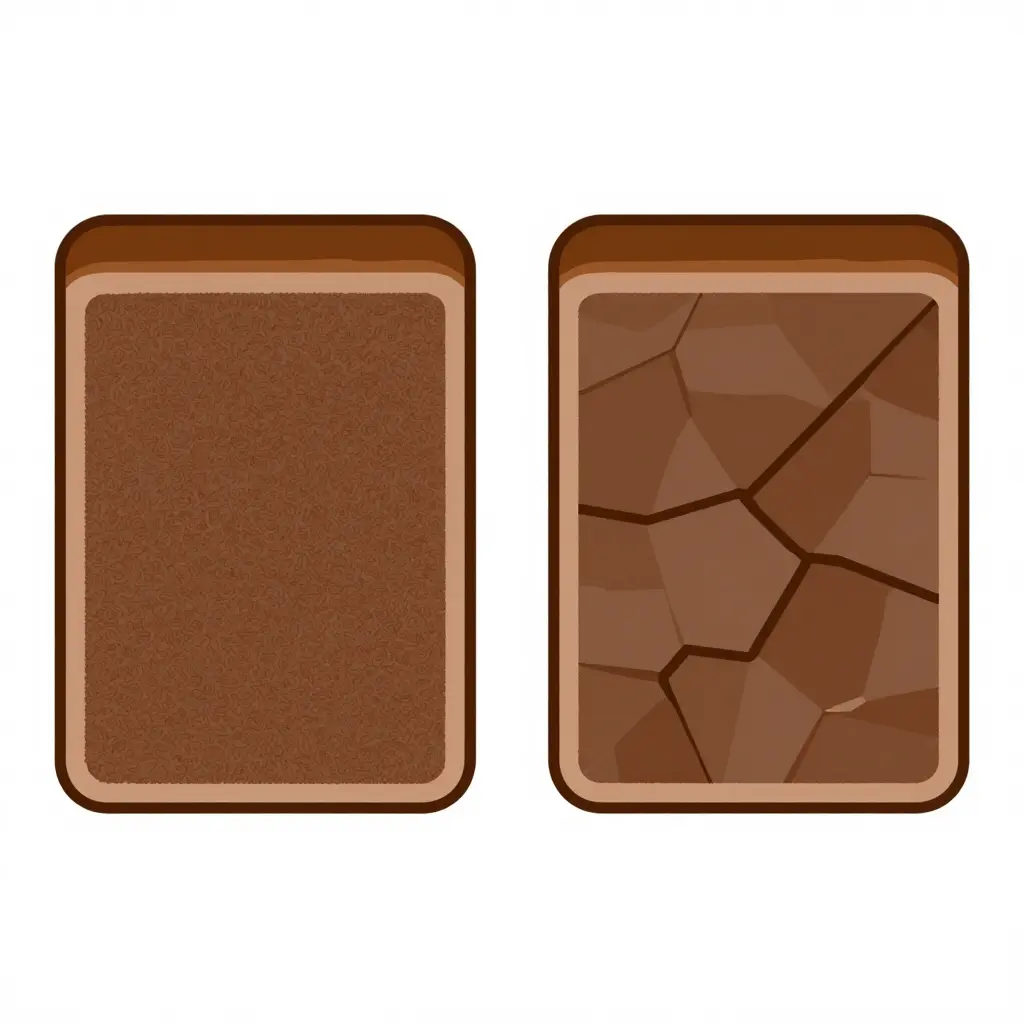
On the left, a dense, tightly bound interior stays firm no matter how long it cooks. On the right, the structure has already broken down, so the same heat and the same crust collapse it into tenderness instead of resistance. Both structures appear side by side in a single steak and beef chili recipe, which is what makes the contrast easy to taste.
Why Chuck Turns Soft: Collagen, Connective Tissue, and Slow Heat
Chuck comes from the shoulder, a muscle that works every time the animal moves. That constant use builds dense connective tissue and a high concentration of collagen, the tough protein wrapped around muscle fibers. Sirloin carries much less, which is why one cut turns tender under long heat and the other stays chewy.
Moist, slow heat does the rest. Held between roughly 160F and 205F for hours, collagen unwinds and hydrolyzes into gelatin, a silky protein that lubricates the meat and gives braises their glossy body. That is the chemistry behind chuck soft enough to shred with a fork.
Beef chili gives that conversion exactly what it needs. The long, wet simmer holds chuck at a steady temperature in liquid, so collagen breaks down gradually instead of seizing up. For a practical example, follow our steak and beef chili recipe, where cubed chuck simmers until it collapses into the sauce.
- Chuck is rich in collagen and connective tissue from heavy use.
- Slow, moist heat converts collagen into gelatin.
- That gelatin makes chuck soft, shreddable, and full of body.
A single sear cannot treat every cut the same way, because the tissue underneath differs. Collagen-heavy cuts like chuck and short rib eventually give way and turn silky, while lean, muscle-dense cuts like sirloin and round stay firm no matter how hard you sear them. That is what makes our steak and beef chili recipe produce such different bites from one pot.
Beef Cuts Comparison: Why the Same Sear Yields Different Textures in Chili
| Beef Cut | Dominant Tissue | Best Cooking Method | Time to Tenderness | Texture Outcome | Ideal Use in Chili |
|---|---|---|---|---|---|
| Chuck | Heavy collagen, connective tissue | Slow braise, low simmer | 1.5 to 2 hours | Soft, shreddable, breaks into strands | Main base, melts into sauce |
| Sirloin | Lean muscle, little collagen | Quick sear, high heat | Never fully tenderizes | Firm, chewy, stays intact | Chunks that stay bite-sized |
| Round | Dense lean muscle, tough fibers | Long braise, gentle heat | 2 plus hours | Dry, firm unless simmered long | Budget filler, needs long cook |
| Brisket | Collagen and thick fat cap | Slow braise or smoke | 3 to 4 hours | Melts into silky shreds | Rich shredded chili base |
| Short Rib | Heavy collagen, rich marbling | Slow braise, low simmer | 2.5 to 3 hours | Fall-apart, buttery, rich | Luxury upgrade chunks |
The sear builds flavor; time and moisture decide texture. Choose collagen-rich cuts for a chili that melts into the sauce, and keep the lean, muscle-dense ones for quick sears where you want something to chew.
Tenderness After Long Simmer by Beef Cut
The chart below plots simulated tenderness scores (0-10) for five cuts after a long, slow simmer. The sear is identical in every case; what changes is how far each cut breaks down once heat and time do their work.
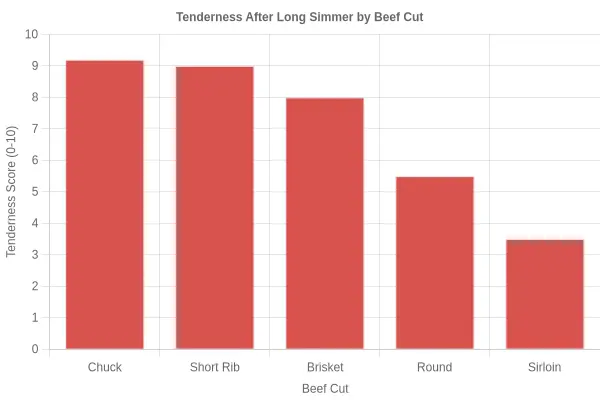
Chuck and short rib reach the top of the scale, brisket lands just below them, sirloin sits at the bottom, and round falls in between. Collagen-rich, well-exercised cuts break down into gelatin, while lean cuts like sirloin tighten and dry out. To see the principle in a real pot, our steak and beef chili recipe cooks the two cuts side by side.
| Beef Cut | Approx. Tenderness Score | Why It Lands There |
|---|---|---|
| Chuck | 9.2 | Heavy collagen melts into gelatin |
| Short Rib | 9.0 | Rich connective tissue, deep marbling |
| Brisket | 8.0 | Tender with enough time, tougher if rushed |
| Round | 5.5 | Lean, moderate collagen, can go dry |
| Sirloin | 3.5 | Lean and already tender, tightens under long heat |
Match the cut to the cooking method and the simmer pays you back.
Why This Steak and Beef Chili Recipe Works
The recipe rests on one idea: give each cut what it needs. A fast, hard sear builds flavor, and a covered simmer turns tough collagen into gelatin, so a single pot ends up with both tender and firm bites.
- Searing builds the base. Dry the steak pieces, use hot oil, and do not crowd the pan. That hard sear forms the browned crust that flavors the whole pot.
- Chuck goes in early. A covered simmer melts its connective tissue, so chuck stays soft and shreddy after an hour or more.
- Sirloin arrives late. Added near the end and cut into larger chunks, it keeps a firm, meaty bite instead of dissolving.
- Two clocks, one pot. Chuck simmers for 90 minutes; sirloin gets the final 20.
The method is simple: sear for flavor, simmer for tenderness, and time each cut to its strengths. Follow the full steak and beef chili recipe to see it come together.
Steak and Beef Chili Ingredients
Here is everything for this beef chili, from the two cuts of beef to the simmering liquid. For the full method, see our steak and beef chili walkthrough before you start browning.
Beef and sear
- 2 lbs beef chuck, cut into 1-inch cubes
- 1 lb sirloin steak, cut into 2-inch cubes
- 1 tbsp neutral oil, such as canola or vegetable
- Kosher salt and cracked black pepper, to taste
Aromatics
- 1 large yellow onion, diced (about 1.5 cups)
- 4 garlic cloves, minced
- 1 poblano pepper, seeded and diced
- 1 jalapeno, minced (optional, for heat)
Spices
- 3 tbsp chili powder blend
- 1 tbsp ground cumin
- 2 tsp smoked paprika
- 1 tsp dried oregano
- 1 tsp kosher salt, plus more to finish
- 1/2 tsp cayenne pepper (optional)
Liquid and simmer
- 1 (28-oz) can crushed tomatoes
- 1 (15-oz) can fire-roasted diced tomatoes
- 1 cup beef broth or stock
- 1 tbsp Worcestershire sauce
- 1 tbsp masa harina, whisked into 3 tbsp water (for thickening)
Finishing and serving
- 1 (15-oz) can kidney beans, drained and rinsed
- 1 tbsp apple cider vinegar
- Shredded cheddar, sour cream, and sliced scallions, for topping
Cutting the chuck into smaller cubes and the sirloin into larger chunks helps both cuts finish at similar tenderness, since sirloin cooks faster and dries out sooner.
Step-by-Step Cooking Instructions
Work through these steps in order for a foolproof steak and beef chili recipe.
-
Pat the beef dry. Blot the cubed chuck and sirloin with paper towels until the surface feels tacky. Dry meat browns better than wet meat.
-
Season generously. Sprinkle both cuts with kosher salt and cracked black pepper. Let the seasoned beef rest at room temperature for 20 minutes.
-
Sear in batches. Heat oil in a heavy Dutch oven until it shimmers. Add the beef in a single layer so each piece sears instead of steaming.
-
Set the beef aside. Transfer the browned cubes to a plate. Leave the flavorful fond clinging to the pot.
-
Sweat the aromatics. Lower the heat, then cook diced onion, garlic, and peppers until soft and glossy.
-
Bloom the spices. Stir in chili powder, cumin, and smoked paprika for one minute. Toast the spices for exactly 60 seconds – longer turns them bitter.
-
Deglaze the pot. Pour in a splash of stock or beer. Scrape up every browned bit.
-
Return the chuck. Add the chuck, tomatoes, and remaining stock. Cover and simmer gently for 90 minutes until fork-tender.
-
Add the sirloin later. Fold the sirloin in during the final 20 minutes. This keeps it tender, never chewy.
-
Finish and season. Taste, then adjust salt, heat, and acid. Simmer uncovered for 5 minutes to thicken, then serve hot.
The Cooking Flow at a Glance
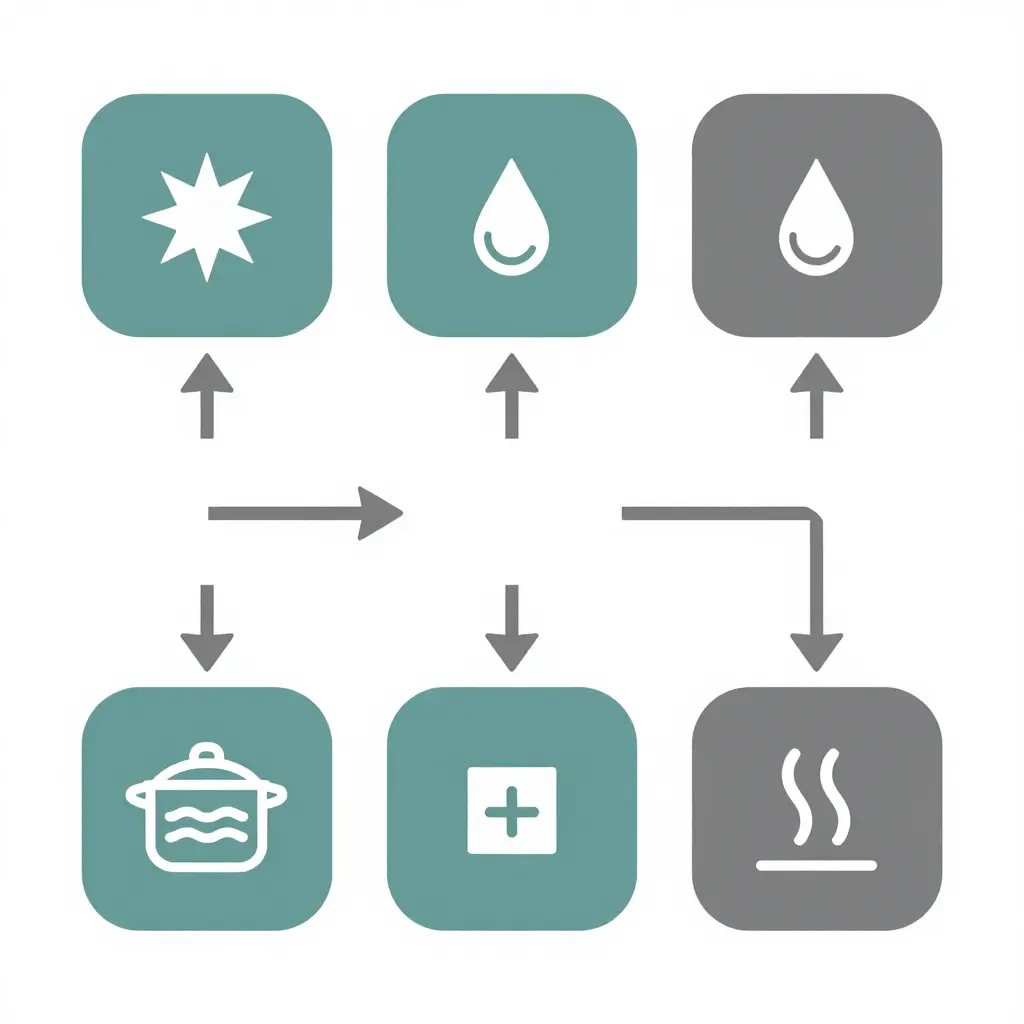
The diagram below maps the five stages a good beef chili moves through: a high-heat sear, a deglaze to lift the fond, a long simmer, a late addition of the lean cut, and a final finish. Chuck and sirloin take different paths through that sequence, which is why timing matters as much as temperature.
Expert Tips for Texture Control
Texture is where beef chili succeeds or fails, and the two cuts need opposite handling.
- Cut to size intentionally. Cube chuck into 1-inch pieces so its collagen breaks down quickly, and cut sirloin into 2-inch chunks so it loses moisture more slowly. Both then land at a similar tenderness.
- Stagger the lean cuts. Add chuck early to break down, then fold in sirloin in the final 20 minutes so it stays tender instead of turning tough.
- Hold a gentle simmer. A rolling boil toughens fibers and blurs the contrast between soft chuck and chewy sirloin; a lazy simmer coaxes collagen without shredding lean meat.
- Rest before serving. Let the chili sit 10 minutes off the heat so juices redistribute and the texture settles.
Follow the steak and beef chili recipe for exact timings.
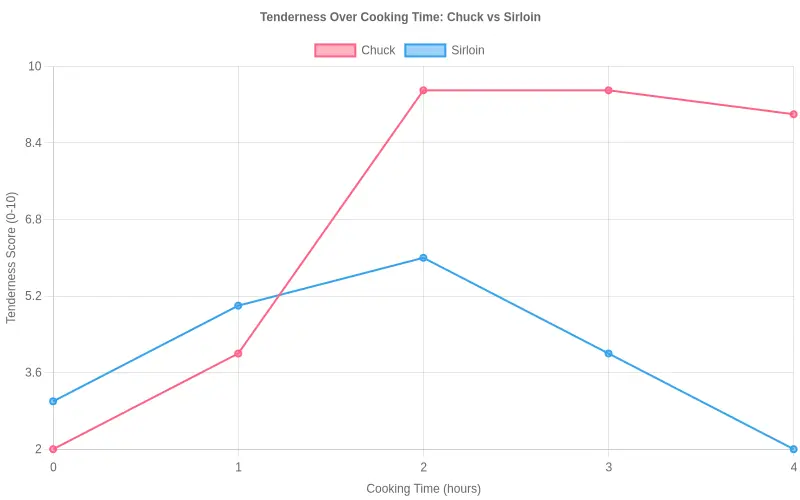
Tenderness Over Cooking Time: Chuck vs Sirloin
The chart below shows why the two cuts diverge in a braise. Chuck’s connective tissue keeps breaking down for hours, so its tenderness climbs steadily and peaks around the 2.5 to 3 hour mark before easing off. Sirloin, lean and lightly marbled, gains a little early, tops out near 1.5 hours, then slides back down as moisture cooks away and the fibers tighten.
How to read it:
- Chuck (solid line): Rises from a low start to a plateau of 9-10 between 2.5 and 3 hours, the point where collagen has melted into gelatin and the meat turns soft and spoonable.
- Sirloin (lighter line): Climbs only briefly, topping out around 5-6 near 1.5 hours. Past that it loses moisture faster than it gains softness, so the line drops toward a chewy 2-3 by the 4 hour mark.
Match the cut to your clock. Give chuck the long, gentle simmer it needs and keep sirloin in the fast lane. A steak and beef chili recipe is a good place to test it, since the slow simmer lets tougher beef relax while leaner cuts stay firm.
Frequently Asked Questions
Can I use only sirloin in this steak and beef chili recipe?
You can, but the texture will change noticeably. Sirloin is lean and firm, so it stays chewy even after a long simmer, while chuck breaks down into soft, shreddable pieces. Many cooks blend both cuts to get flavor from the steak and body from the chuck in a single pot. The full steak and beef chili recipe explains how each cut behaves over time.
Should I sear the beef before simmering?
Yes. Searing browns the surface through the Maillard reaction and builds a deeper, roasted flavor that simmering alone cannot create. Work in small batches so the meat browns instead of steaming in its own juices.
How do I keep chuck from drying out?
Chuck dries out when it is cooked too hot or too fast. Keep the liquid level at least halfway up the meat, and simmer gently at a low bubble rather than a rolling boil. The fat marbling in chuck also helps it stay moist during the long cook.
Can I make this chili in a slow cooker?
Yes. Brown the meat first on the stove, then transfer it to the slow cooker with the remaining ingredients. Cook on low for six to eight hours so the chuck turns tender without turning mushy.
Do I need to drain the fat?
Chuck releases a fair amount of rendered fat during cooking. Let the finished chili rest for a few minutes, then skim the oil from the surface with a ladle or spoon. You can also chill the pot overnight and lift off the solid fat the next day.
The Takeaway: Match the Cut to the Method
Searing does the same thing to every cut; the cuts themselves are built differently. Chuck is threaded with collagen, which slow, moist heat dissolves into gelatin and softens its fibers into a silky bite. Sirloin is lean and tightly packed with little collagen to give, so long cooking only tightens it. Same sear, opposite results.
The steak and beef chili recipe uses that contrast on purpose. Chuck goes in early and simmers for hours, breaking down into the base that thickens the pot. Sirloin goes in late and briefly, just enough to cook through while keeping its firm, meaty character. If you like building flavor from bones, the same low-and-slow logic shows up with beef neck bones.
Know what each cut needs before you turn on the heat. Brown both, then cook each to its own clock, and one pot gives you two textures that belong together.