
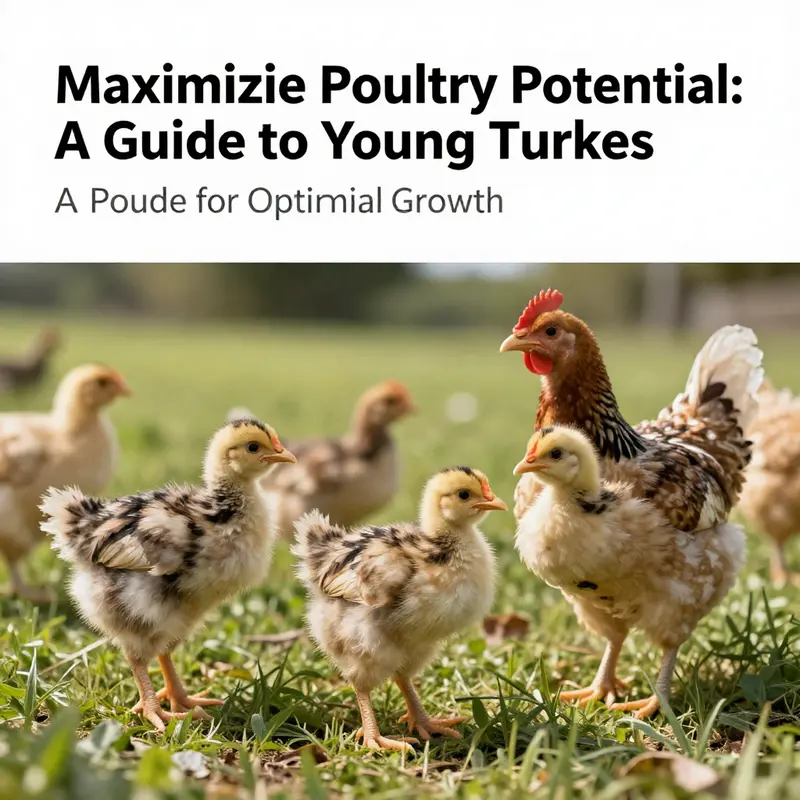
Understanding the developmental stages of young turkeys, or poults, is crucial for business owners in the poultry sector. These juvenile birds require specialized care to thrive, impacting both productivity and profitability in the industry. With a focus on their unique nutritional needs and health management practices, this guide aims to equip poultry farmers with the knowledge necessary to support the growth of healthy, robust turkeys. Each chapter provides essential insights that connect back to the overarching theme of fostering the optimal conditions for young turkeys, ensuring they develop into vital contributors within the agricultural market.
Feeding the Future: A Nutrition Blueprint that Shapes Young Turkeys
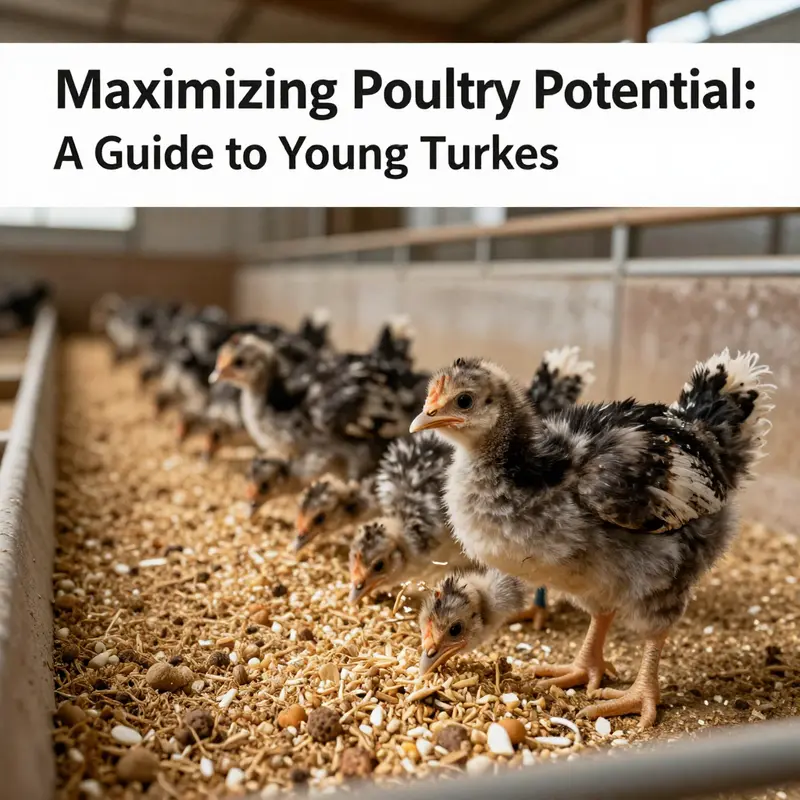
Poult beginnings are not merely a matter of shelter and warmth; they hinge on a deliberate nutrition strategy that primes every stage of growth. A young turkey, or poult, enters the world with a fast cadence of development, and its diet must keep pace with that tempo. The brooding phase, roughly from hatch to eight weeks, is when the bird builds muscle, fortifies its immune system, and lays down the foundation for bone strength and bodily resilience. Nutrition during this window is not a luxury but a determinant of future yield, health, and welfare. When farmers and conservationists think about how to steward poult populations, the first question is not just what to feed, but how the feed is balanced to support rapid, efficient, and sustainable growth. The right blend of protein, energy, vitamins, minerals, and gut-compatible additives becomes the invisible scaffolding beneath every feather and every heartbeat, guiding a tiny bundle of potential toward a robust adult form.
Protein sits at the core of the poult’s nutrition, acting as the raw material for tissue synthesis, organ development, and the maturation of the immune system. A high-quality starter diet provides ample protein and a carefully calibrated amino acid profile. Among the amino acids, methionine and lysine are especially pivotal, serving as critical building blocks for muscle deposition and connective tissue development. In practice, this means starter feeds are formulated to deliver a higher concentration of digestible protein and balanced amino acids than later grower diets. The form of this starter feed—often crumble or mash—slightly eases the mechanical demands of early digestion. Poult physiology makes them particularly responsive to easily accessible nutrients, and feed granularity matters. A crumble or mash facilitates faster intake and reduces the risk of selective feeding, ensuring the young bird receives a steady stream of nutrients rather than a patchwork of preferred textures.
Beyond the protein story, vitamins and minerals provide the subtle lighting that allows growth to proceed without dark corners of deficiency. Among the micronutrients, thiamine, or vitamin B1, stands out for its fundamental role in energy metabolism and nervous system function. The historical guideline for starting poults emphasizes a dietary thiamine level of about 2.0 parts per million. Such a specification may seem precise, yet in the context of rapid growth, even small shortfalls can ripple into poor feed efficiency, reduced vigor, and delayed development. Pyridoxine, or vitamin B6, supports amino acid metabolism and immune competence, two processes that are in high gear during the brooding phase. When the micronutrient balance falters, growth falters as well. The aim is not to flood the diet with supplements but to deliver a measured, reliable spectrum of vitamins and minerals that aligns with the birds’ metabolic needs at each stage.
The inclusion of probiotics and other functional feed additives has emerged as a practical strategy to support gut health during this sensitive period. A robust gut microbiome helps the poult extract nutrients more efficiently, process feeds with higher protein content, and mount a quicker immune response to potential pathogens. In the first weeks of life, a developing gut learns what to tolerate and what to deter; probiotics help steer that learning toward beneficial microbial communities. In turn, a healthier gut translates into better feed conversion, more consistent weight gain, and fewer episodes of illness. Good gut health also establishes a foundation for long-term resilience, reducing the risk that early vulnerabilities become late-life liabilities.
Manufacturing quality and feed formulation play equally important roles. The best outcomes arise when starter feeds are designed to meet precise nutrient targets for each developmental stage and when the feed remains stable from the producer to the brooder. Moisture control, mold prevention, and proper storage are essential to maintaining nutrient integrity. In modern systems, specialized, high-quality feeds are produced to meet international standards, and many operations rely on precision formulations that optimize the balance of energy and protein for the poult’s age. It is not merely about giving more of one nutrient; it is about aligning the nutrient mosaic with the bird’s developmental trajectory. In some global production networks, the breadth of expertise involved in formulating turkey feeds spans continents, reflecting a shared commitment to consistent quality and predictable performance.
The balance of energy and protein is a dynamic conversation across the brooding timeline. While the starter phase benefits from higher protein with a generous amino acid supply, it cannot be assumed that protein should remain elevated for longer than eight weeks. Overshooting protein levels beyond the starter phase can impose metabolic stress and lead to inefficiencies or liver strain as birds mature. A carefully timed transition to grower and finisher formulations helps maintain smooth growth curves, supports bone mineralization, and reduces the risk of leg weakness or metabolic disorders. Producers monitor body condition, feed intake, and weight gain to determine when to shift diets, ensuring that energy intake stays commensurate with metabolic demands.
Mineral nutrition is another anchor of poult health. Calcium and phosphorus, in particular, drive skeletal development and egg-laying potential later in life. Adequate vitamin D3 ensures calcium and phosphorus are absorbed effectively, reinforcing bone integrity during a period of rapid growth. Trace minerals such as zinc, manganese, and selenium contribute to enzyme function, immune defense, and antioxidant protection. The interplay of minerals with vitamins creates a tightly coupled system in which a deficiency in one component can ripple through growth, feather development, and disease resistance. The practical takeaway for growers is to rely on feeds that provide a complete, scientifically grounded mineral profile rather than assuming that a single nutrient will compensate for others.
Environmental and management factors intersect with nutrition in shaping poult outcomes. Temperature regulation, humidity control, and comfortable, spacious housing reduce stress and permit birds to allocate energy toward growth rather than thermoregulation or coping with crowding. Social dynamics matter as well; appropriate stocking density and flock composition help poults learn to forage, peck, and eat in a synchronized way that minimizes competition and waste. The sensory environment—light exposure, litter quality, and access to clean water—also modulates appetite and feed efficiency. When the environment supports steady feeding behavior, nutrition can do its job more cleanly, translating dietary formulation into uniform growth, robust immune status, and lower mortality.
In the broader landscape of poultry nutrition, there is a continual push toward feeds that deliver the exact nutrient balance required at each developmental milestone. Precision-formulated turkey feeds aim to match the bird’s evolving needs, reducing waste and maximizing conversion efficiency. Producers may source feeds through international networks, where manufacturers design products to meet or exceed established standards. While the specifics of formulations can vary by region and practice, the underlying principle remains constant: feed should be compatible with the poult’s growth stage, digestible, and resilient to storage conditions. This approach supports not only productive output but also animal welfare, aligning economic objectives with responsible farming practices.
Practical kitchen and home management readers sometimes seek tangible links to nutrition principles through familiar culinary parallels. A simple, protein-rich kitchen reference can illustrate how nutrient density and digestibility inform cooking and serving choices. For example, a straightforward dish like turkey hash can serve as a concrete reminder that high-quality protein, balanced fats, and accessible micronutrients contribute to satiety and energy. turkey-hash-recipe offers a familiar context for thinking about protein balance and digestibility, echoing the broader message of poults: the nutrients you provide in the earliest days lay the groundwork for later health and performance.
Ultimately, nutrition for young turkeys is a holistic enterprise that weaves together feed composition, management practices, and environmental stewardship. It requires careful attention to detail, a willingness to adjust formulations as birds grow, and a recognition that early care has long-lasting consequences. When nutrition is aligned with the poult’s physiology and life cycle, the flock enters adolescence and maturity with a structural advantage—muscle that translates into meat yield, bones that support sustained activity, and immune defenses strong enough to weather the challenges of production. The science of starter feeds, micronutrient adequacy, gut health, and stage-specific energy balance becomes a practical philosophy rather than a theoretical framework. It is this philosophy that informs decisions on storage, handling, and the timely transition between diets, and it is how producers translate research into healthier birds, better efficiency, and more resilient farming systems.
External resource: for authoritative reference on age- and sex-specific nutritional requirements and comprehensive feeding guidelines, consult the US Poultry Industry Manual – Turkey Feeding and Nutrition. https://www.extension.org/pages/57355/us-poultry-industry-manual-turkey-feeding-and-nutrition
null
null
Final thoughts
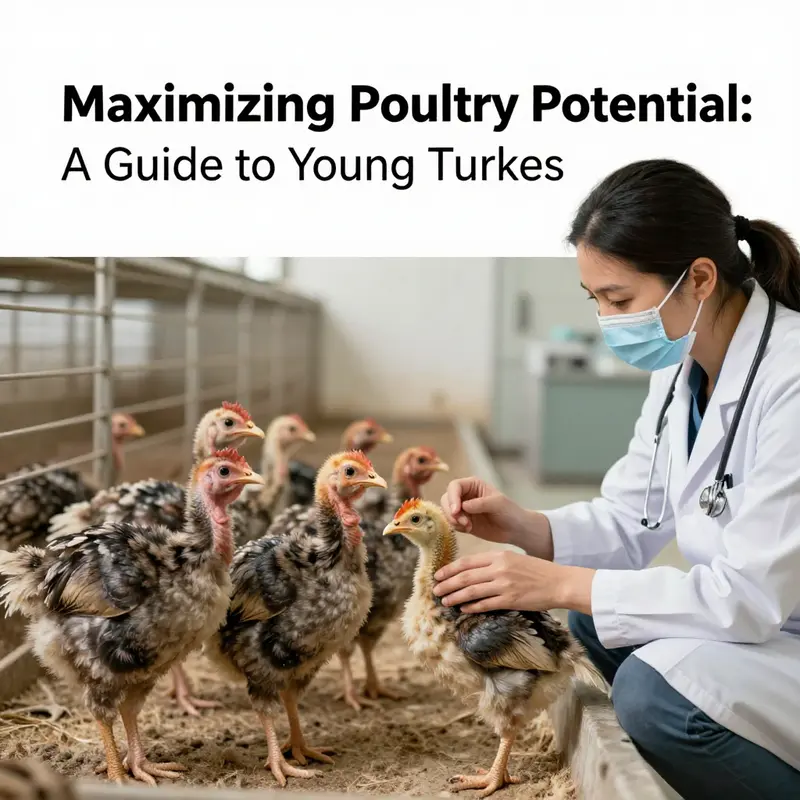
In the poultry business, the growth and health of young turkeys are pivotal for sustained success. By concentrating on their nutritional needs and implementing robust health management practices, poultry farmers can significantly enhance the well-being of these birds. Such an investment not only minimizes mortality rates but also leads to a more productive farming operation. Adopting a proactive approach ensures young turkeys transition into fully grown adults, contributing positively to the poultry industry.