
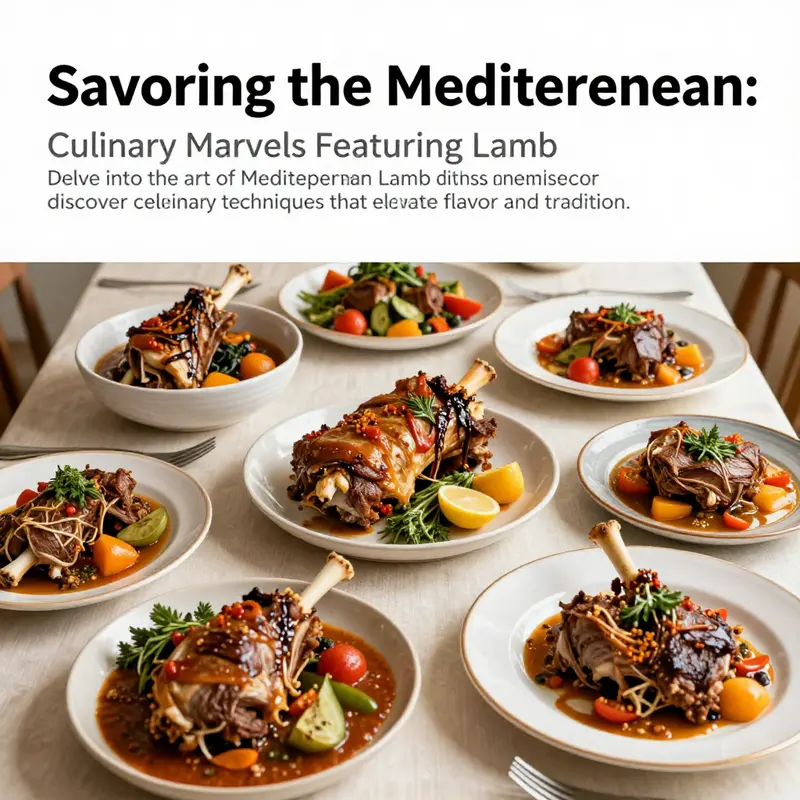
Lamb holds a revered place in Mediterranean cuisine, revered for its rich taste and adaptability across various cooking methods. From slow-braising to grilling, lamb dishes exemplify Mediterranean culinary traditions, driven by the essence of regional ingredients like fresh herbs, olive oil, and seasonal vegetables. This exploration not only highlights classic dishes but also illustrates techniques that create the signature flavors of the region. Chapter One delves deep into iconic Mediterranean lamb dishes, showcasing their cultural significance and complexity. Chapter Two unfolds the essential techniques and ingredients that infuse these lamb dishes with their vibrant characteristics, offering valuable insights for business owners looking to capitalize on this culinary tradition.
Lamb on the Mediterranean Table: Slow Fires, Fresh Herbs, and the Rhythm of Shared Meals
Across sun-warmed terraces and stone-arched kitchens, lamb has long held a central place on the Mediterranean table. Its richness is not a solitary note but a baseline that invites a chorus of other flavors—garlic, olive oil, lemon, herbs, and the bright, seasonal vegetables that mark the changing months. In this culinary world, the meat’s depth becomes a canvas for technique rather than a showy prop for sauces. The goal is simplicity that yields generosity: a piece of lamb that shreds at the touch of a fork, aromatics that perfume the air, and a sauce or braising liquid that carries the memory of the cook’s hands and the land where the ingredients were grown. The Mediterranean kitchen treats lamb as a partner, not a star that must be upstaged. When the fire is steady and patient, the result is a dish that feels both rustic and refined, the kind of meal that invites sharing and conversation as much as it does savored bites.
The hallmark technique across the region is slow cooking. Braising or roasting at a gentle pace for hours allows the meat to surrender its grip and take on the aromatics that accompany it. This is not a rush to finish; it is a deliberate, patient conversation between meat, fat, and heat. In the best versions, the lamb emerges tender, its fibers undone by time, while the surrounding liquid gathers the essence of garlic, herbs, citrus zest, and the olive oil that makes Mediterranean cuisine sing. The slow process is a teacher, revealing the subtle changes that happen when patience is allowed to guide the kitchen. A successful braise turns the humble leg or shank into something that transcends its own simplicity—the kind of dish that tastes like a story told through time, memory, and the land’s seasonal rituals.
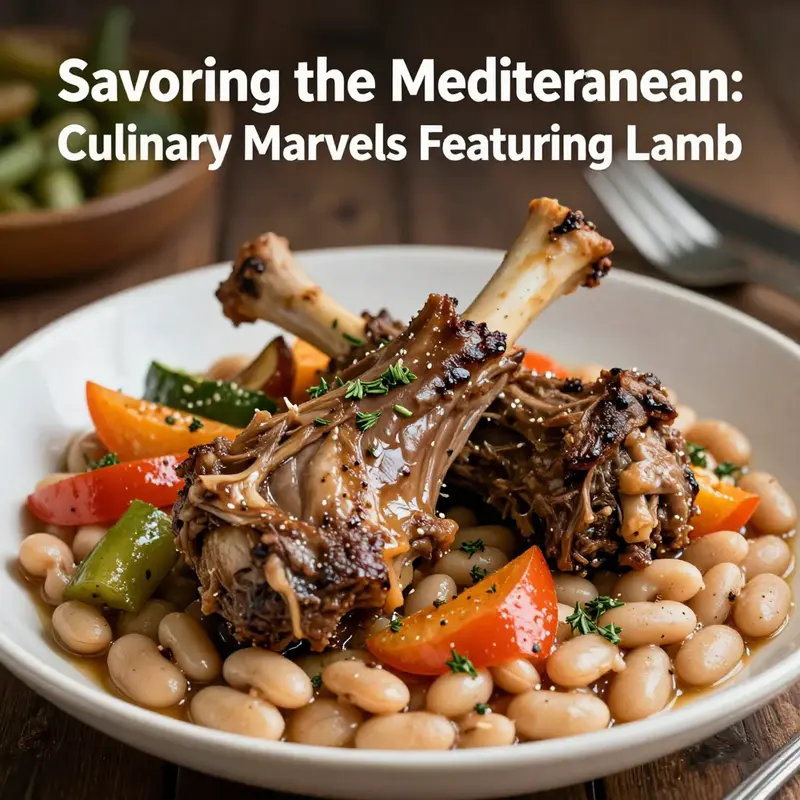
Within this broad tradition, a signature preparation often cited for its depth and balance features a slow-braised lamb shank served with white beans, a robust, smoked-like sausage, and briny olives. The dish is a study in contrasts that resolve into harmony: the meat’s richness softened by prolonged braising; the beans providing creaminess and a gentle starchy counterpoint; the sausage adding a smoky, savory kick; and the olives delivering a mouthful of brine that punctuates the dish rather than overpowering it. The braising liquid, enriched by the mists of garlic and olive oil, rests on the plate as a glossy, deeply flavored glaze that clings to each element. Eating it feels like tracing a map of the region—coastlines, hills, and markets—where every bite reveals a new facet of the Mediterranean’s layered palate. It is a reminder that great cooking often hides in restraint: the chorus of elements is more powerful when none of them shouts too loudly.
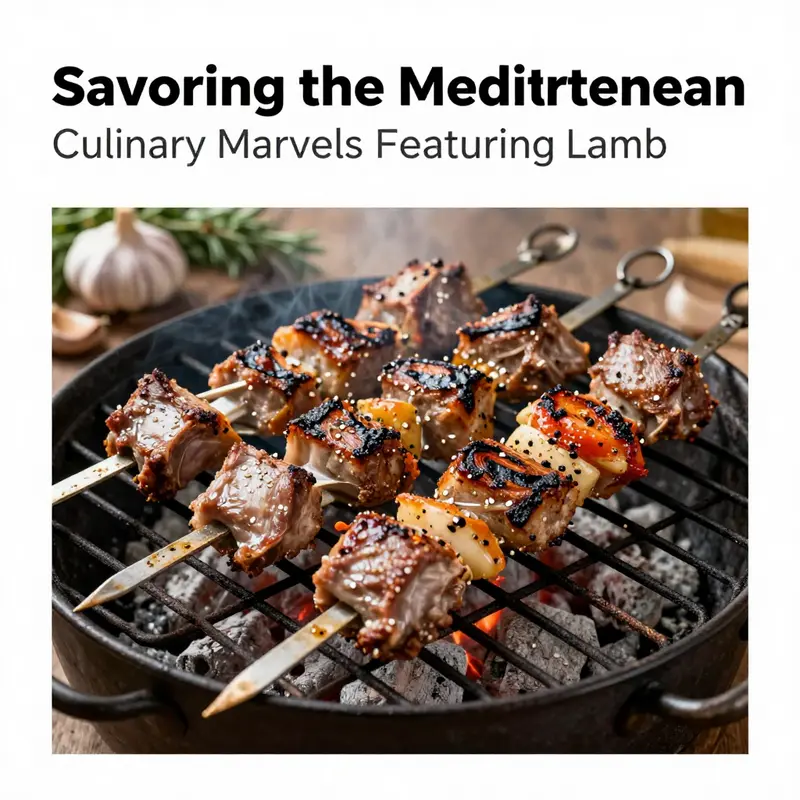
Yet the Mediterranean lamb tradition isn’t confined to a single method. Grilling remains a vital complement, especially in places where the grill becomes a theatre of flame and smoke. Here, lamb is skewered and coaxed to a char over high heat, its surface sealing in juices while a bold, garlic-forward marinade or rub blankets the meat in savory warmth. The technique emphasizes umami without heavy sauces, allowing the lamb’s own sweetness to take the lead and the roasted garlic notes to bloom as a natural, savory crescendo. The result is a lean, bright counterpoint to slow-braised preparations: quick-fire searing that produces a crust of savoriness, followed by a resting period that lets the fibers relax and the juices redistribute. When done well, grilled lamb carries a whisper of smoke that speaks to the open air markets and coastal breezes that have long shaped this cuisine. The simplicity here is almost ceremonial—the method itself becomes part of the flavor, not merely a way to achieve it.
For home cooks drawn to the Mediterranean’s rhythm, the slow-cooked lamb recipes circulating in home-kitchen communities offer a practical bridge to tradition. These are recipes that honor the region’s core ingredients—tomatoes, olive oil, garlic, and herbs—and pair them with the lamb in approachable ways. The method is inviting precisely because it doesn’t demand a complex pantry or specialized equipment. A pot, a steady flame, and the patience to let time do the heavy lifting can yield dishes that feel quintessentially Mediterranean: deeply savory, nourishing, and bright with the season’s produce. The philosophy behind these preparations aligns with the broader Mediterranean dietary ethos—fresh, local ingredients, prepared with care, and shared in generous portions with friends and family. The scent of garlic, the gloss of olive oil, and the tang of citrus peel become the sensory cues that connect the sense of place to the plate.
A practical thread running through these traditions is the attention to balance. The Mediterranean kitchen understands that fat, protein, and vegetables must work in concert, not competition, to create a meal that sustains without overwhelming. A well-composed lamb dish often sits at the intersection of tenderness and brightness: lean cuts yield a lighter profile when paired with olive oil and tomatoes; braised preparations gain depth when citrus zest or a splash of white wine is introduced at the right moment. The idea of balance also extends to texture. The silky mouthfeel of soft-cooked beans or the gentle snap of roasted vegetables can contrast with the meat’s melt-in-your-mouth tenderness, creating a multi-layered experience that invites lingering at the table.
Performance in the kitchen mirrors the Mediterranean sense of place. The approach is not about chasing novelty but about honoring season and soil. Fresh herbs—thyme, rosemary, bay, and oregano—are not mere embellishments; they are essential participants that carry the land’s character into the dish. Garlic, often roasted or crushed to release its sweetness, is used with restraint to avoid overpowering the lamb’s own richness. Olive oil, the region’s staple, functions not simply as fat but as an aromatic medium that carries the flavor from pan to plate. Tomatoes, whether simmered into a sauce or roasted alongside the meat, contribute acidity and brightness that lift the heaviness of the meat. This culinary philosophy—seasonal, sustainable, communal—shapes not only the flavor profiles but also the way meals unfold: at a steady pace, with conversation, and around a table where the act of sharing is part of the dish’s flavor.
In translating these traditions to everyday cooking, many readers look to the idea of a complete, well-balanced plate. One example from contemporary interpretations is a meal featuring oven-cooked lamb fillet with Mediterranean vegetables and tomatoes. The dish is celebrated not for its flamboyance but for its measured, balanced energy: lean protein alongside fiber-rich legumes and nutrient-dense produce. When prepared with attention to portion and oil, it can offer a practical snapshot of the Mediterranean diet’s potential. The reported nutritional note—approximately 219 calories per serving in a typical, well-balanced iteration—underscores a broader aim: flavor without excess, nourishment that respects both taste and health. This kind of calculation is not a rigid diet rule but a guide to understanding how sensory satisfaction can align with a mindful approach to eating.
The broader culinary philosophy here speaks to a shared principle that transcends borders within the region. Mediterranean lamb cooking embodies a balance between time-honored methods and contemporary sensibilities. It finds its soul in the patient process of braising, in the direct fire of grilling, and in the quiet alchemy that happens when ingredients meet heat and patience. The narrative is not merely about a single dish but about a lineage of cooks who have evolved techniques while keeping faith with the land’s generosity. To borrow a line from a revered food historian, “The best meals are made slowly, with love.” That sentiment resonates through every simmered pot and every hot grill, reminding us that the most memorable meals are built on careful attention, regional pride, and the simple joy of sharing food with others.
For readers seeking a curated exploration of regional approaches within the broader Mediterranean lamb repertoire, a collection dedicated to Mediterranean lamb recipes offers a hands-on gateway to adapt these principles to home kitchens. The curated pages guide readers through variations that emphasize regional ingredients and techniques while keeping the essential balance at the heart of Mediterranean cooking. This resource becomes a practical companion for cooks who want to understand how a braise in one village might differ from a grilled skewered lamb in another, yet both still speak the same language of olive oil, garlic, and seasonal produce. It is this shared vocabulary that makes the Mediterranean lamb tradition so accessible and inviting, even as its execution ranges from the rustic to the refined.
As an invitation to extended exploration, the journey through lamb in the Mediterranean setting invites readers to consider not only the plate but the ritual surrounding it. In many Mediterranean cultures, meals are moments of communal life—hours spent around a table with family and friends, wine or water within reach, bread broken and shared, and a rhythm of conversation that ebbs and flows with the food being prepared and served. The cooking itself becomes a form of hospitality, a way to say, with a few simple ingredients and patient hands, that guests are welcome and that the meal is a gift that binds people together. This ethos, more than any specific technique or recipe, is what gives Mediterranean lamb its enduring appeal. It explains why a braised shank with humble accompaniments can carry the resonance of a holiday feast or a market-side family supper, depending on the company and the moment.
For those who wish to deepen their practice, the key lies in embracing the season, choosing good ingredients, and allowing time to work its quiet magic. Start with a cut that suits slow cooking—shanks and shoulders offer depth when braised properly. Build flavor with garlic, citrus zest, and a handful of fresh herbs. Use tomatoes and beans to add texture and nourishment, and bring in olives and a crust of bread for the final savor. Let the dish rest briefly after cooking to allow flavors to reassemble and the meat to reabsorb its juices. The result is not only a satisfying meal but a demonstration of how a cuisine rooted in place can still feel intimate and personal when rendered in a home kitchen.
For readers who want to taste the Mediterranean with a broader sense of place, a deeper dive into Mediterranean lamb recipes can provide a structured path through different regional expressions while preserving the common threads of technique and ethos. The collection emphasizes how a single ingredient—lamb—can harmonize with diverse landscapes, from coastal cornices to inland valleys, yielding meals that honor both tradition and personal taste. In the end, the essential message is clear: the Mediterranean way of cooking lamb is not about chasing a singular, signature flavor but about embracing a lineage of cooks who have learned to coax tenderness from meat, brightness from vegetables, and unity from a table shared with others.
Internal resource: Mediterranean lamb recipes
External inspiration for those seeking visual and practical guides to slow-cooked lamb dishes that evoke the Mediterranean mood can be found in curated online collections. They offer a window into how time, technique, and place transform simple ingredients into deeply resonant meals. Slow-cooked lamb recipes that transport you to the Mediterranean are a reminder that cooking is a way of traveling without leaving the kitchen, a slow journey that returns you, at the end of the day, to a table where flavor, comfort, and community come together.
External resource: https://www.pinterest.com/pin/965037026383073689/
From Fire to Tagine: Mastering Techniques and Aromatics in Mediterranean Lamb Cooking
In the cradle of the Mediterranean, lamb has earned a rightful place at the table, not merely as a source of protein but as a canvas for aroma, texture, and memory. The meat carries the land’s heat—from sun-warmed olive groves to the briny spray of the coast—and cooks best when it is treated with restraint and care. The chapter that unfolds here moves through techniques and ingredients as if walking along a coastal path, where every turn reveals a new impulse of flavor. The aim is not to overwhelm the lamb but to invite its natural richness to mingle with herbs, citrus, and the earthy warmth of spices. In this, technique and ingredient become partners, each shaping the other into a dish that feels both deeply traditional and vibrantly contemporary.
At the heart of Mediterranean lamb are the fresh herbs. Rosemary, oregano, thyme, and parsley work not as mere flavor garnish but as essential neighbors to the meat. They contribute an earthy depth, a piney resin that echoes pine groves and herb gardens alike, and they bloom most fully when allowed to play with olive oil and garlic rather than masked by heavy sauces. Garlic, in particular, is a quiet powerhouse in this repertoire. When crushed or sliced and warmed in olive oil, it releases a fragrance that is almost a memory in itself—a memory of markets, morning light on stone walls, and kitchens where a pot braises away while conversations unfold. The trio of garlic, lemon juice, and olive oil forms a foundation in Mediterranean cooking that tenderizes gently, brightens without souring, and enhances the lamb’s natural savor without pretending it is something it is not.
The lemon, with its bright acidity and citrus zest, is not simply a flavor note but a balancing agent. The acid cuts through fat and gaminess, lifting the meat from heavy richness to something lighter and more fresh. A squeeze of lemon or a few drops of lemon juice added during braising can transform a dense, slow-roasted leg into something that still feels sunlit and lively. In many Greek and Turkish preparations, lemon’s role is doubled by its zest, which introduces aromatic oils into the dish, layering citrus brightness with the fundamental savor of lamb. Olive oil acts as both a cooking medium and a flavor conduit, delivering fat-soluble aromas while enabling gentle emulsification with herbs and garlic. These three elements—garlic, lemon, olive oil—operate as a musical triad, allowing lamb to sing rather than shout.
Seasoning with spices in the Mediterranean repertoire is nuanced, not aggressive. Cumin and coriander come from the southern and eastern shores, lending warmth and a subtle earthiness that complements rather than competes with lamb’s natural meatiness. Paprika, including its smoked variety, introduces depth and a gentle waft of sweetness that can wake up the palate without masking the lamb’s character. Dried mint—especially common in Turkish and some Greek preparations—brings a refreshing note that contrasts nicely with the fat’s smoothness, like a cool breeze over sun-warmed stone. These spices are often used in modest amounts, layered in during marination or early cooking to build a foundation that supports the meat’s own savor rather than substituting for it.
Marination is a particularly effective way to let these ingredients mingle. In dishes such as Greek kleftiko, where lamb is slow-roasted in a sealed package with aromatics, a marinade of lemon, garlic, and oregano permeates the meat, infusing it with bright citrus notes and herbal freshness. The marination process is not just about flavor; it allows the fibers to relax and become more receptive to heat, yielding tenderness that is the hallmark of slow-cooked lamb. In other Mediterranean traditions, marination may be briefer, but the concept remains the same: acid and herbs precondition the meat, so that slow cooking or long simmering can carry the flavors deeply into the tissue. The result is a lamb that tastes of the region—of hillside herbs, olive groves, and sun-baked kitchens—yet feels accessible to contemporary home cooks.
The techniques that carry these flavors into the dish are as important as the ingredients themselves. Slow roasting is a central technique in many Southern European and North African traditions. A shoulder or shank can be nestled with aromatics, tomatoes, olives, and chickpeas, then cooked at a gentle heat for hours. The slow process serves two purposes: it breaks down connective tissue to yield tender meat, and it creates a braising liquid that becomes intensely flavorful as it reduces. This is where the region’s affinity for braises and tagines really shines. In Moroccan cooking, lamb braised with vegetables, preserved lemons, cumin, coriander, and paprika becomes a casserole of complex aromatics that cling to the meat and cling to memory. The beauty of this method is that the meat’s texture becomes the vehicle for the spice’s aroma, the acid’s brightness, and the olive oil’s mellow richness—all in harmony rather than competition.
Grilling is another pillar of Mediterranean lamb cooking. When lamb is skewered or laid on a hot grill, the outside forms a char that adds smoky depth and a glossy crust. A garlic-infused rub or marinade enhances the outer layer without hiding the interior’s tenderness. High heat seals in juices and promotes Maillard reactions, which build depth of flavor as sugars and proteins caramelize. The Mediterranean grill tradition emphasizes restraint; the idea is to coax out the meat’s natural savor and amplify it with spice and aroma rather than drench it in sauces. A quick sear followed by resting allows the juices to redistribute, yielding slices that are deeply flavorful and have a satisfying bite.
Tagines, a culinary form most commonly associated with Morocco but embraced across the region, capture another dimension of the lamb’s identity. The tagine is as much a vessel as a technique. Its conical lid concentrates steam and returns condensation to the simmering meat, punctuating the cooking process with gentle basting. In many tagine recipes, lamb braises with tomatoes, olives, apricots, or preserved lemons, along with cumin, coriander, cinnamon, and sometimes paprika. The contrast between savory meat, bright citrus, and a faint sweetness creates a balance that mirrors the Mediterranean’s history of cross-cultural exchange. Here, the acidity and the spice’s warmth coexist with the tang of olives and the brightness of lemon—an arrangement that is at once comforting and adventurous.
The science behind these culinary choices is not incidental. Lamb contains branched-chain fatty acids that contribute to its distinctive gaminess. The acid in citrus and vinegar helps to moderate this intensity, while herbs break up the intensity of the fat with fresh, green notes. Fresh herbs release essential oils when heated, which accelerates aroma perception, making each bite more aromatic than the last. Ground spices like cumin and coriander bring volatile compounds to the forefront, providing warmth that remains approachable because it is balanced by lemon’s acidity and olive oil’s fat that carries the aroma across the palate. The Mediterranean kitchen’s core philosophy—pairing bold, robust flavors with fresh, bright elements—aligns with scientific principles of flavor chemistry, clarity, and balance.
In practice, this approach makes the lamb more versatile than it might appear at first glance. A dish can be built around a braised lamb shank, then reimagined as a grilled centerpiece or a tagine with vegetables and legumes. The same principle applies to vegetables: tomatoes, onions, eggplant, peppers, and legumes like white beans and chickpeas are not mere accompaniments but integral partners. Their acidity, sweetness, and earthiness complement the meat and soak up the braising liquid, creating a cohesive plate that satisfies in texture and taste. In the home kitchen, these combinations are not esoteric; they are practical and repeatable. A slow-cooked lamb shank with white beans and olives, as celebrated in some contemporary Mediterranean kitchens, demonstrates how a single cut of meat can become a complete meal through careful pairing and patient cooking.
For home cooks seeking a wider springboard of ideas, a broad collection of Mediterranean lamb inspirations exists online. A curated set of slow-cooked lamb recipes showcases how low heat and long simmering bring out the meat’s full potential while allowing the other ingredients to shine. These references help home cooks map a path from hearty, rustic stews to lighter, herb-forward grills, all anchored by the same essential ingredients and techniques that define the Mediterranean profile. For readers who want to explore this family of dishes further, the collective body of Mediterranean lamb recipes provides a practical, appetizing way to experiment with the season’s produce and to adapt techniques to taste and equipment.
In this spirit of exploration and continuity, a link to a broader collection of Mediterranean lamb recipes can serve as a helpful touchstone for readers seeking to expand their repertoire: Mediterranean lamb recipes. The page offers a mosaic of regional interpretations, from slow braises to grilled skewers, all anchored by the essential trio of garlic, lemon, and olive oil and framed by the region’s distinctive spice palette. It is not a replacement for the chapter’s core discussion but a companion resource to anchor readers in a wider practice. Similarly, for those drawn to a more specific preparation that marries lentils, greens, and lamb in a single comforting bowl, the lamb lentils rice spinach combination presents one of many graceful intersections where nutrition, texture, and aroma converge in the Mediterranean style.
As a practical throughline, consider how a dish like oven-cooked lamb fillet with Mediterranean vegetables and tomatoes embodies the nutrition ethos of the region. Lean lamb, vegetables rich in fiber, and olive oil contribute to a balanced plate that delivers satisfaction with a measured calorie profile and a pleasing macro balance. This approach reinforces the Mediterranean idea of a meal as a harmonious composition rather than a heavy centerpiece alone. The careful distribution of fat through olive oil, the protein from the lamb, and the fiber from the vegetables work together to create a rounded, nutrient-dense dish that can be enjoyed without guilt or excessive heaviness. Home cooks can adapt this balance by choosing lean cuts, trimming visible fat, and pairing with legumes or whole grains to amplify fiber and fullness.
The methods and ingredients described here offer both a fidelity to tradition and a sense of possibility. They reflect a shared culinary philosophy that respects the intrinsic virtues of lamb while inviting it to mingle with the landscape of herbs, citrus, and spice that defines the Mediterranean kitchen. The slow braise’s tenderness, the grill’s crisp edges, and the tagine’s perfume of spice all illustrate a spectrum of technique that honors the meat’s character and expands its reach. This is not a static canon but a living practice, one that invites cooks to adjust, taste, and balance in the moment while staying true to the region’s culinary DNA.
To close this circuit of technique and ingredient, imagine a dish that marries the fragility and the heft of the meat with the region’s bright aromatics: lamb braised with tomatoes and white beans, finished with lemon zest and a scatter of fresh parsley, then brightened with a glug of olive oil. The result is a plate that feels both rustic and refined, a nod to the coast and to the hillside terraces, a meal that carries the warmth of the hearth and the light of the shore. It is this union of method and flavor that makes Mediterranean lamb not only a tradition but a living practice—one that invites cooks to learn, taste, and repeat with confidence.
For readers who wish to see a canonical recipe example in a similar vein, a Middle Eastern lamb tagine offers a concrete blueprint of technique, spice, and balance. You can explore a detailed preparation in external culinary resources that showcase how the ingredients and methods discussed here come together in real-world cooking: Middle Eastern Lamb Tagine on BBC Good Food. This external reference is a bridge from theory to practice, illustrating how acid, herbs, and spices converge with slow cooking to produce a dish that embodies the Mediterranean ethos while inviting the curiosity of modern cooks.
In the end, the strength of Mediterranean lamb lies in its adaptability and its insistence on quality ingredients treated with respect. The same lamb that begins as a cut of meat becomes a story of the region: its markets, its cooks, and its shared tables. The techniques—marination with citrus and herbs, slow roasting to melt the sinew, grilling for a smoky crust, tagine braising for perfume-rich tenderness—are not just steps to follow. They are invitations to savor, to observe how aromas rise, how textures soften, and how balance is achieved through a chorus of flavors rather than a single overpowering note. This is the heart of Mediterranean lamb: a conversation between meat and memory, between heat and herbs, between the old ways and the new, all converging on a plate that nourishes, comforts, and inspires.
Final thoughts
Mediterranean dishes featuring lamb are masterpieces of culinary tradition, resonating with rich flavors and a profound connection to local ingredients. Exploring these dishes not only enriches our understanding but also offers invaluable insights for business owners looking to expand their culinary repertoire. By incorporating these recipes and techniques, restaurants can offer authentic dining experiences that celebrate the soul of Mediterranean cuisine, enticing customers with the rich heritage and flavors of the region. Embracing lamb dishes into your culinary offerings ensures a deeper appreciation of Mediterranean culture and taste.