
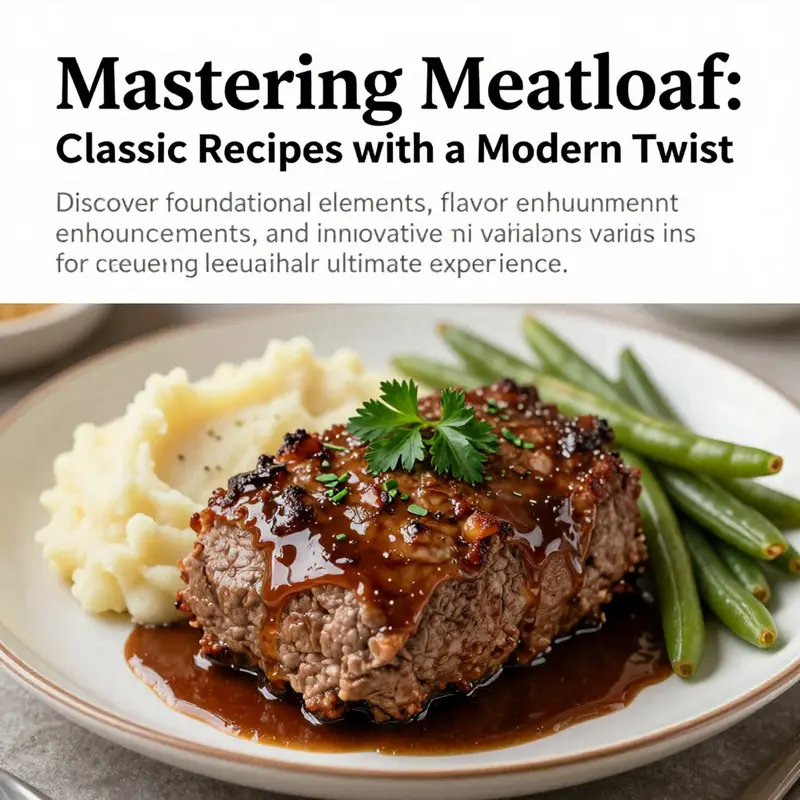
The timeless meatloaf is a cornerstone of American cuisine, beloved for its hearty flavor and versatility. As business owners in the culinary field, understanding the components and skills required to craft an exceptional meatloaf is essential for menu creation and customer satisfaction. This article breaks down meatloaf into its foundational elements, explores techniques to elevate its flavor, and introduces innovative variations that can cater to diverse palates. By mastering these aspects, you will not only enhance your offerings but also create memorable dining experiences for your customers.
Foundations of Flavor: Mastering the Core Build and Proportions for a Juicy Classic Meatloaf
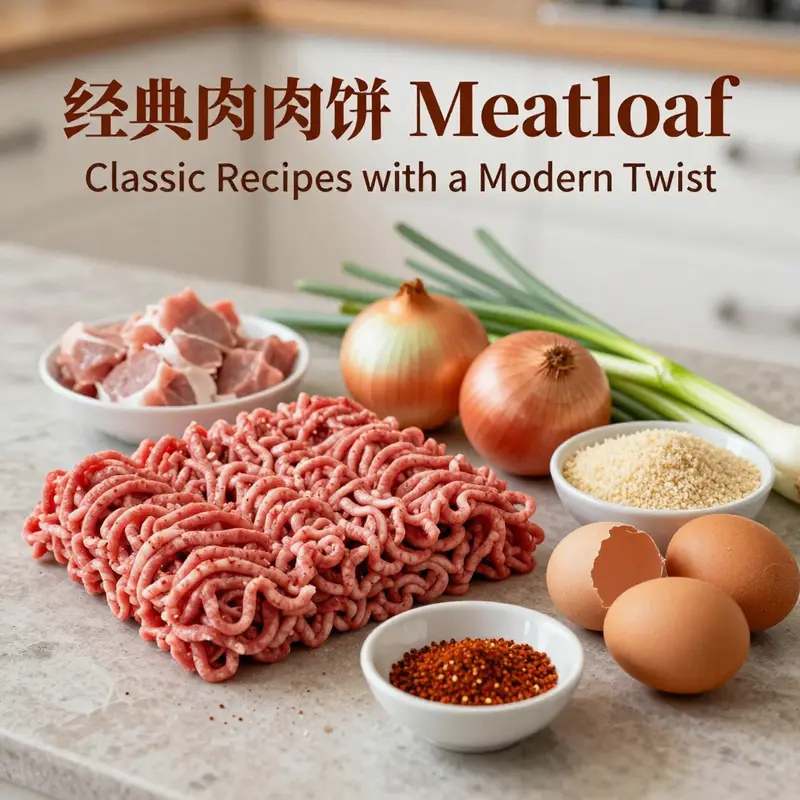
A great meatloaf starts where many traditional dishes end—not with a complicated glaze or an exotic spice blend, but with a precise balance of meat, binder, moisture, and heat. The core of a classic meatloaf lies in the way the meat is formed and the way the other ingredients interact with it. When you strike the right proportion, the result is a loaf that holds its shape yet yields a juicy, tender bite, with a crust that offers just the right amount of crusty sweetness. The two anchors—meat mixture and the outside texture—work in concert, while every other element plays a supporting role.
Choosing the meat is the first decision. The traditional approach uses a lean-to-fat ratio that preserves structure without drying out. A common guideline is a lean-to-fat spectrum around 70/30 or 80/20 for the beef component, with a little extra fat introduced by mixing in pork or veal. In numbers that translate across home kitchens, a practical target is roughly 500 grams of mixed ground meat per loaf, with fat contributing to moisture and flavor, and lean meat delivering the bite. The choice of cuts matters too: a blend from cuts like chuck, brisket, or shoulder brings depth, while adding a small portion of pork shoulder or belly can heighten succulence without tipping the loaf toward heaviness.
The binder and moisture system are what keep the loaf cohesive as it cooks. Eggs are the classic binder, and breadcrumbs or oats act as the primary absorbent, soaking up juices and distributing them evenly. Beyond the obvious, a well-timed addition of liquid enhances the binding in a manner that makes the loaf forgiving in the oven. Many cooks find success by staggering moisture in, not all at once; it helps the mixture hold together while still releasing moisture in the center as it bakes. A common method utilized across reliable recipes is to incorporate a small amount of seasoned liquid—such as a warmed liquid seasoned with a pinch of salt, onion, or garlic water—so the mixture becomes cohesive rather than paste-like. A whisper of soy sauce or Worcestershire can contribute savory depth without overpowering the meat’s natural character. One oft-cited technique in classic adaptations is to blend a tablespoon of tomato sauce or a spoonful of mayonnaise to enrich tenderness and lift the finish without dulling the meat.
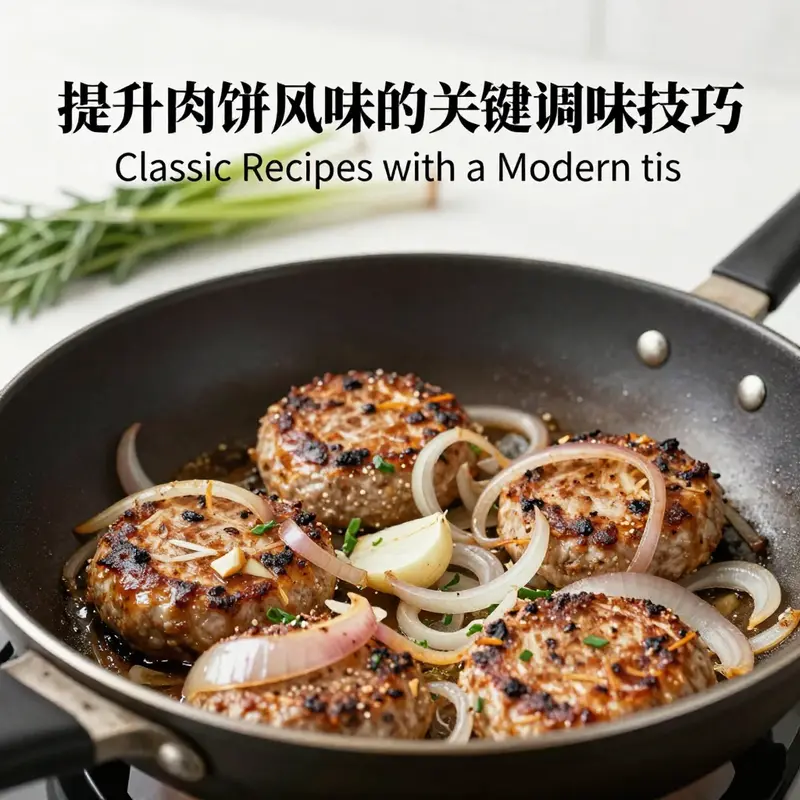
Flavor layering is where the craft shows. Start with a foundation of aromatics—sautéed onion and garlic until they release their sweetness and mellow edge. Dry spices follow: thyme, oregano, and a touch of black pepper set the stage. Wet flavor boosters—mustard, light soy, or a splash of Worcestershire—provide brightness and umami, ensuring the loaf doesn’t drift into blandness. The most defining step is the surface treatment: a glossy glaze made from tomato sauce, a kiss of honey or brown sugar, and a dash of apple cider vinegar can transform the crust into a lacquered, savory crust that keeps moisture inside. The glaze also acts as a signal to the heat—an inviting cue that the loaf has reached a harmonious finish.
Baking technique matters as much as the ingredients. A preheated oven at about 375°F (190°C) is a reliable setting for a balanced bake. Baking times vary with size, but a standard loaf often reaches optimal juiciness after roughly an hour, with an internal temperature around 160°F (71°C). Midway, a gentle turn can promote even cooking, especially if the loaf is shaped in a thick oval rather than a flat disk. Resting after removal is essential; allowing the loaf to sit for ten minutes lets the juices distribute, preventing a flood of moisture from escaping the slices and preserving a neat slice.
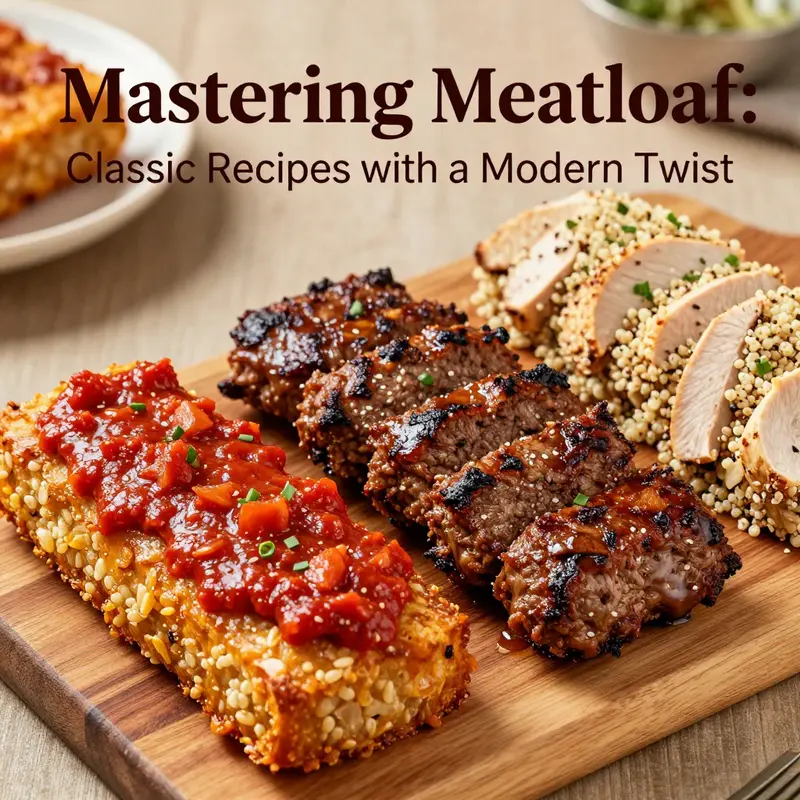
As you refine technique, you may explore variations that stay true to the core philosophy. An Italian-inspired version builds texture with sausage meat and Parmesan, leaning on a tomato-based sauce beneath the crust. A Southern twist might surface through a smoky glaze and a brown sugar–barbecue balance, offering a sweet heat that still respects the loaf’s tenderness. For lighter cravings, consider substitutions such as ground turkey or chicken, paired with a nutty binder like oats or quinoa, which can keep the loaf moist without relying on fat. Each variant still rests on the same essential framework: a balanced meat mixture, a careful binder, a measured amount of moisture, and a controlled bake that yields a crust with a gentle snap and a moist interior.
Even the science of flavor can play a subtle supporting role. Contemporary observations note how sodium-rich flavor packets and dehydrated aromatics interact with the meat’s fat and water content to form a stable matrix during cooking. When used judiciously, these elements enhance the overall balance rather than merely salt the surface, contributing to a more polished and lasting finish. The same concept travels into the way a glaze clings, the surface caramelizes, and the loaf slices cleanly. For cooks who want to see how these principles translate in other cuts, imagine a succulent technique that finds echoes in a perfectly roasted chop or a pan-seared steak—techniques that thrive on building layers rather than relying on a single, heavy seasoning.
Within this framework lies a practical touch: a discreet nod to a favorite flavor partner from broader cooking tradition. By exploring the idea of cross-cut inspiration—such as looking at how a well-seasoned cut like garlic lamb chops benefits from a similar approach to layering and moisture—home cooks can transfer tested logic across recipes. In that spirit, a simple reference point to deepen inspiration can be found in the idea of integrating a robust, herb-forward profile that adapts to the loaf’s meatiness. For enthusiasts looking to see such cross-pollination in action, consider exploring further details through a related culinary source like Garlic Lamb Chops. Garlic Lamb Chops.
By respecting these foundations—the right meat balance, a smart binder strategy, deliberate moisture management, and thoughtful flavor layering—you set the stage for a classic meatloaf that remains juicy, sliceable, and deeply satisfying with every bite. This solid base also makes it easier to experiment with variants later, confident that the core mechanics will carry the meal from kitchen to table with consistent, delicious results.
null
null
肉饼的创新变体与现代做法:在传统之上绘制层次感的风味地图
肉饼作为一块可塑的烹饪棋盘,在传统基础上不断延展出丰富的风味与结构。经典美式肉饼以碎牛肉为核心,通常混入猪肉以提升嫩度,辅以干面包屑、蛋、洋葱和基本的香草。这一基础并非死板,而是一个可以随时延展的框架。研究显示,Lipton洋葱汤粉之所以广受好评,正是因为它在咸甜平衡与表层焦香之间找到了微妙的折中。其内容物包括脱水洋葱、糖和蛋白质粉等成分,能帮助肉馅在烘焙时形成更稳定的水分保留与更均匀的表皮。这种“经过多年厨房优化”的配方,并非简单的快捷调味,而是一种通过配料相互作用而实现的精准调控。敢于在这块基础上创新的人,会把洋葱的甘甜逐步引向一个更立体的口感区域。
在层次感这件事上,肉饼的改良往往从四个方向展开:基础香气的巩固、干香料的运用、液体增味的点睛以及表层封口的光泽。先用洋葱和大蒜缓炒,让香气缓慢释放,随后加入干香料如百里香、迷迭香和牛至,提升芳香的层次。再用少量芥末酱、鱼露或帕玛森芝士粉来增强鲜味与明亮感。最后,在出炉前刷上一层“肉饼酱”——番茄酱混合蜂蜜与苹果醋,让外表光泽而微甜,同时锁住内部水分。这些环节并非独立的步骤,而是相互呼应的风味线索,彼此叠加形成一个多维度的口感地图。
烘焙依然是实现这些层次的关键环节。通常建议在预热至190℃的烤箱中烤约1小时,直到内部温度达到71℃,再让肉饼静置10分钟。中途翻面一次有助于受热更均匀,避免边缘干硬。这样的时间控制并非铁律,而是根据肉馅的脂肪含量和形状大小微调。对健康考量较高的读者,可以将牛肉换成鸡胸或火鸡肉的变体,搭配藜麦或糙米作为黏合与口感的辅助,既保留肉饼的丰盈,又降低脂肪密度。
创新从来不是抄袭,而是对传统的尊重与再塑造。以意大利风味为例,碎肉可以混入碎意大利香肠、罗勒与帕玛森芝士,基底选用番茄酱,既熟悉又带有清新的香草气息。南部烧烤风味则通过烟熏辣椒粉、枫糖浆和烧烤酱的涂抹,创造出甜辣并存、层次分明的外皮。更大胆的变体包括以鸡肉为主的版本,抹茶鸡肉饼带来日式清新感,芝士鸡肉饼以拉丝效果凸显融化的幸福感,墨西哥风味鸡肉饼则借助孜然、辣椒粉与蜂蜜呈现热情奔放的口感。还有南瓜鸡肉饼和海苔鸡肉饼等创意,每一种都在不同的质地与风味之间找到属于自己的平衡点。
除了口感,肉饼的呈现方式也在进化。莲花形的肉饼以胡萝卜花蕾、青豆莲子、洋葱花瓣与黄瓜荷叶做装饰,既美观又适合节日宴席。千层肉饼则以剩余饺子皮层层叠加,煎烤出外皮酥脆、内里多汁的结构,这是一种对厨余材料的巧妙再利用。更现代的做法则包括将肉馅通过蒸煮或烤制结合的方式处理,以清香的蔬菜底托托出肉香的对比,或在煎制后淋上糖醋酱,带来酸甜的余韵。
若你需要更多灵感与具体思路,不妨参照地中海风味的变体思路作为切入点。你可以查阅 Mediterranean lamb recipes,从羊肉的香料搭配中提取合适的香草与酸味元素,进而融入传统肉馅的结构中,形成属于自己的风味地图。这样的跨风味探索,正是现代肉饼创作的魅力所在。
在不断追求个性化与健康的今天,肉饼的创新并非对传统的背离,而是对传统的延展。每一处改变都在盘中讲述一个故事:关于材料的相遇、火候的温柔、以及层次感在口腔里展开的节奏。正如一位烘焙师所言,传统不是一成不变,而是在不断试验与调整中绽放新的光彩。外部灵感与内部技巧的融合,才是让肉饼在新时代继续发光的关键。
外部参考资源:玉林新闻网的相关报道(https://www.yulinnews.com.cn/2026/0224/123456.html)。
Final thoughts
The journey through the world of meatloaf reveals that this classic dish holds untapped potential for innovation. By mastering its foundational elements, utilizing advanced flavor techniques, and exploring creative variations, business owners can transform meatloaf into a standout offering in their culinary repertoire. Understanding these components not only enhances the flavor and texture of the dish but also creates opportunities for engaging customers with diverse tastes and dietary preferences. Elevate your menu with extraordinary meatloaf that tells a story of tradition and creativity.