
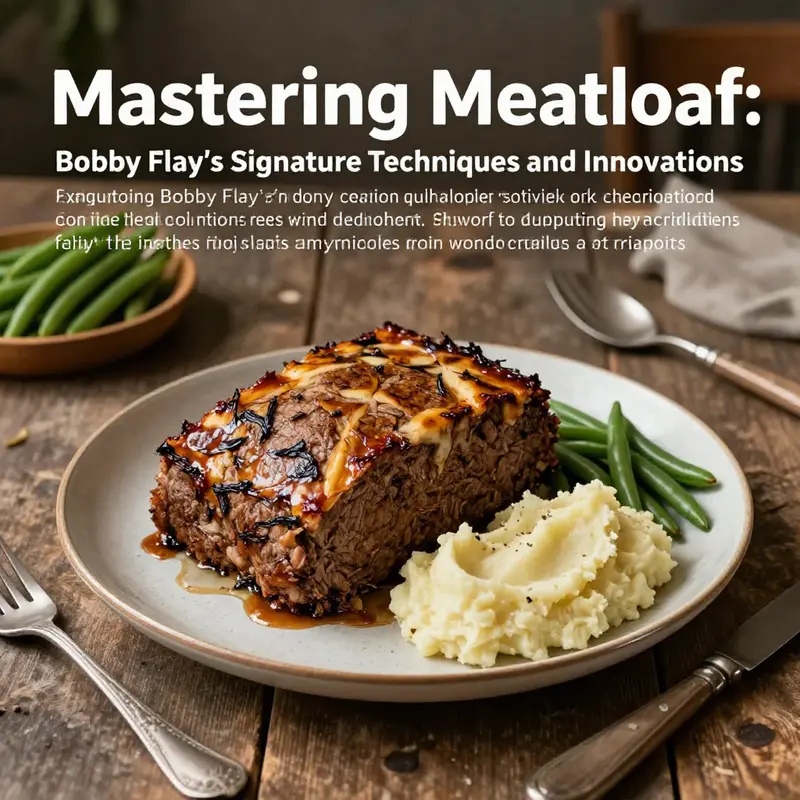
Meatloaf, an enduring classic of American comfort food, receives a remarkable upgrade through the culinary lens of renowned chef Bobby Flay. Flay, known for his innovative approach to traditional recipes, transforms the humble meatloaf into a flavorful centerpiece through distinctive techniques and ingredient choices. As business owners in the food industry or culinary enthusiasts, understanding Flay’s mastery not only enhances your own offerings but also fuels creativity in your menu designs. This article delves into Flay’s techniques and key ingredients that make his meatloaf stand apart, followed by innovative variations that are inspired by his unique culinary style. Whether you’re looking to elevate your kitchen skills or inspire your next menu, Flay’s approach to meatloaf provides essential insights for all culinary entrepreneurs.
null
null
Flavors Refined: Bobby Flay–Inspired Meatloaf Variations that Elevate Comfort Food
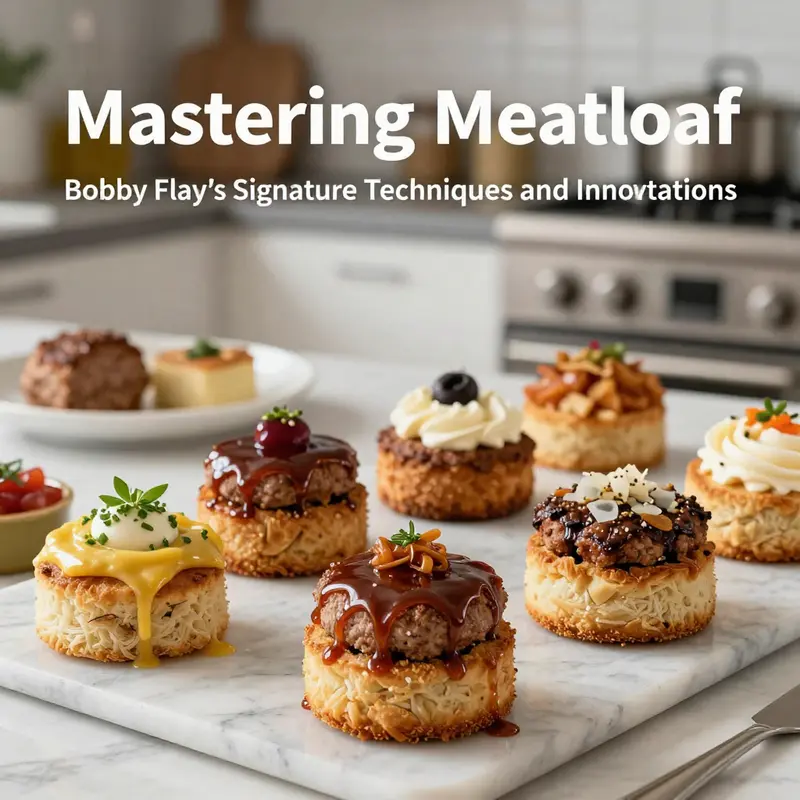
A meatloaf, at first glance, seems like a humble canvas. Its purpose is simple: ground meat held together with a few sturdy binders, seasoned with a quiet confidence that rewards you with a warm, savory slice. Yet there are moments when a chef shaped by television and a career built on bold, confident flavors can turn that canvas into a gallery. Bobby Flay is one of those voices. He has carved a space where classic American comfort food meets a restaurant kitchen sense of balance and bravado. In his hands, meatloaf is not a relic but a possibility. The chapter that follows travels through a lineage of technique and texture, tracing how Flay has reimagined the loaf not by discarding its essence but by layering it with contemporary, high-impact flavors. The goal is not to imitate a televised moment but to understand the logic that makes a meatloaf feel at once familiar and surprising, a dish that can anchor a weeknight dinner and hold its own on a chef’s table when plated with care and intention.
To begin, imagine the standard meatloaf as a base camp from which a journey can depart. A traditional loaf relies on a few components: ground beef for the backbone, breadcrumbs that soak up moisture, eggs that bind, and a seasoning that tastes of home first and then of something more. The genius of Flay lies in insisting that every element carry more meaning than its modest surface would suggest. He operates with a philosophy that big flavors emerge from well-chosen contrasts and a careful assembly. The result is a loaf that feels grounded in comfort yet prepared to meet the demands of modern palate sensibilities. In practice, this means you first think about the meat as a foundation, but you season it not just with salt and pepper but with a measured chorus of aromatics, all while safeguarding the loaf from dryness with deliberate moisture and gentle mixing. The process begins with a careful hydration of the breadcrumbs in milk or water, allowing the grain to swell so the loaf retains its tenderness. Then comes the binders: eggs that knit the mixture without making it dense, and perhaps a light splash of another liquid that brightens the overall texture.
From this base, the path diverges into variations that push past the nostalgia of a square pan. One of the most celebrated approaches in Flay’s repertoire draws directly on a French onion soup sensibility. The idea is not to imitate soup in a bowl but to translate its essence into a loaf that smells like a kitchen where onions slowly surrender their sweetness. Caramelized onions, already a hallmark of deeply browned flavor, become an aroma that fills the room and a sweetness that anchors the mid palate. They are interwoven into the meat mixture or layered between two blankets of the loaf, so the savory richness of beef is pierced by the gentle, almost honeyed character of onion sugar. The plan works because caramelized onions carry a complexity that ordinary onions cannot. When you combine them with a savory stock, a modest amount of cheese, and a careful balance of salt, you create an umami profile that feels luxurious without tipping into richness that overwhelms the beef. If the cheese is included, it should contribute dimension rather than simply melt into the loaf. Gruyere, with its nutty edge, offers a subtle bite that contrasts with the dark caramel and the slow roast. Parmesan can add a crisp, bronzed top that bakes into a crackling crust, a texture that is as pleasing as the melt inside. The result is a loaf that feels finished, not simply baked, the way a well plated dish arrives at a table with a sense of destination rather than a rehearsal.
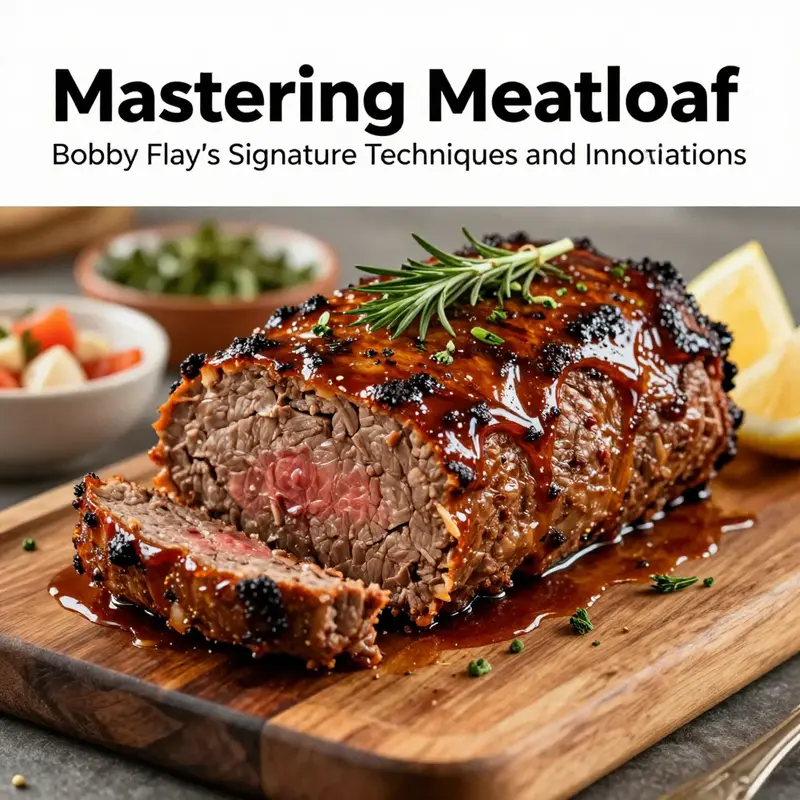
Yet the onion-inspired variation is only a doorway. The broader idea is to treat meatloaf as an arena for texture and aroma that can carry global influences without losing its core identity. Consider the addition of a savory glaze that travels a ring of flavor from the crust into the interior. Instead of a one-note brown sugar glaze, Flay-inspired glazes often blend elements that echo a meal finished with a glass of wine: a touch of wine reduction, perhaps, with a hint of acidity to balance the sweetness, a whisper of herb that lingers on the palate, and a last-minute brush that renders the top glossy and attractive. The glaze is not an afterthought; it is the final layer of seasoning that coaxes the loaf to a deeper, more cohesive finish. If you prefer a looser glaze, you can apply it toward the end of cooking so that it caramelizes in the last stage, creating a thin, shiny crust that holds in the aromas and seals the surface from dryness. When done with restraint, the glaze becomes a signature rather than a distraction, a fingerprint of the chef’s intention.
Texture, as much as flavor, defines a Bobby Flay–style loaf. Flay’s technique emphasizes not overworking the meat mixture. Overworking can break down the proteins in a way that creates a dense, tough crumb. Instead, he advocates gentle mixing, a few deliberate folds that ensure the meat remains cohesive but not compact. This approach preserves a certain tenderness, a lightness that invites the loaf to be sliced cleanly and to retain moisture through the final bite. The choice of meat is also part of the conversation. A loaf built with a blend of beef with a small percentage of pork or veal offers a more nuanced fat distribution and a more supple texture. The fat helps maintain succulence as the loaf roasts and the surface begins its slow, glossy transformation. The balance is delicate: too much fat and the loaf risks a greasy finish; too little and it risks dryness. The responding technique is to introduce moisture in other ways, whether through a milk-soaked crumb, a modest amount of stock, or a handful of finely chopped vegetables that release their juices as they cook. The result is a loaf that carries its own steam and aroma, a multi-sensory experience that begins with the sight of a gently browned crust and ends with the scent of caramelized onion, roasted herbs, and melted cheese.
In the realm of flavor architecture, salt becomes a design element rather than a simple seasoning. Flay’s loaves benefit from layers of umami and a careful deployment of salt at multiple moments: a gentle seasoning of the meat mixture, a kiss of salt for the glaze, and a final adjustment after resting. Resting time is not a luxury but a practical strategy. After the loaf emerges from the oven, letting it rest for several minutes before slicing allows the juices to reabsorb and redistribute, ensuring the interior remains moist even as the crust firms up. This moment of quiet is when the loaf reveals its true architecture: the interior and exterior have learned to cooperate, producing slices that hold their shape while remaining tender and flavorful throughout.
The concept of elevating a humble loaf often invites the question of how far one should push the innovation. The aim, in the Frey Flay-inspired approach, is not to obscure the meat’s character with loud ingredients but to heighten it with precise technique and thoughtful additions. That means choosing ingredients that carry their own weight and harmonize with beef rather than competing against it. A brigade of aromatics—garlic, thyme, a touch of rosemary, perhaps a few chopped herbs—serves as the perfume that lifts the dish. The onion, fragrant with sweetness, anchors the loaf, while the cheese works as a binder and a crust-maker, giving a textural contrast that makes every bite a study in contrast: soft interior, crisp exterior, and a mouthful of layered flavors that unfold slowly as you chew.
This approach also aligns with a broader culinary trend toward modern comfort food. Home cooks are embracing the idea that a familiar dish can be a canvas for technique sourced from different culinary traditions. It is not about recreating a restaurant plate in a family kitchen, but about translating a chef’s philosophy into a home-friendly form. The principle at work is simple: use technique to extract more depth from what is already loved. Slow caramelization of onions, careful moisture management, the strategic use of cheese for both flavor and texture, and a glaze that is tooled to color the crust without masking the loaf’s intrinsic character—these are the elements that transform a basic loaf into a dish that tastes of time spent cooking and of intention. At its best, a Flay-inspired meatloaf feels luxurious not because of its complexity alone, but because every component has a reason for existing, every spice and ingredient earning its place.
As readers consider applying these ideas, they can consult a central resource that compiles variations on the traditional loaf. That hub organizes ideas around a common goal: to celebrate the versatility of meatloaf while keeping the essence intact. It serves as a practical entry point for home cooks who want to explore flavors, textures, and plating styles without losing sight of the dish’s nostalgic roots. For those who want a quick gateway to a broader collection of ideas, the following link provides a starting point rooted in shared techniques and adaptable flavors: meatloaf recipes.
In practice, this approach to meatloaf begins with a plan and ends with a plate that invites conversation. The plan is simple: build a loaf with a well-balanced profile, incorporate a French onion-inspired dimension for depth, and finish with a glaze or crust that makes the top sparkle while preserving the interior’s juiciness. The plate that follows should present slices that hold their shape and release aroma with the first bite. A well-rested slice reveals the interior’s tenderness, the subtle cheese melting into the meat, the caramelized onion providing sweetness that lingers, and a finish that echoes the glaze’s brightness. When served alongside roasted vegetables, or a simple mashed potato, the loaf becomes the centerpiece of a meal that feels polished yet accessible. The technique translates into a sense of confidence in the kitchen: a sense that a classic dish can be revisited with intention, that a tradition can be enriched without being rewritten, and that a loaf, once merely comfort food, can become something that rewards both cook and guest with an unexpected sophistication.
The broader culinary conversation about reimagining familiar dishes is not limited to a single chef or a single show. It reflects a contemporary appetite for techniques that elevate everyday meals while staying emotionally resonant. Slow caramelization, precise moisture control, and a thoughtful interplay of textures can transform a straightforward meatloaf into a contemporary classic. The result is a dish that belongs to both memory and modern dining, a plate that tells a story of tradition tempered by curiosity and executed with precision. In such a narrative, the loaf sits at the table not as a compromise between convenience and flavor but as a bridge between comfort and artistry.
If you are curious to see Flay’s approach in action, watching the episode that frames his meatloaf challenge offers insight into his rhythm: the way he chops, seasons, layers, and finalizes the glaze, all while maintaining a sense of control over the loaf’s progression from raw mix to tender slice. Even without a printed recipe, the video demonstrates a philosophy: that technique, timing, and balance are more nourishing than flourish alone. For a detailed look at Bobby Flay’s signature style and his take on this dish, you can explore the episode featuring his meatloaf challenge: Throwdown with Bobby Flay – Meatloaf Episode (IMDb) https://www.imdb.com/title/tt0856947/episode/?e=137424. The visual record invites home cooks to observe how the doughy center stays juicy, how the edges crisp, and how the finish carries a glow that hints at the flavors waiting inside.
In closing, the Bobby Flay approach to meatloaf—especially the onion-forward, cheese-kissed variations—offers a blueprint for modern comfort cooking: honor the tradition with texture, elevate with technique, and finish with a glaze that binds the flavors into a single, glistening bite. It is a reminder that recipes, even those that feel timeless, are most successful when they invite exploration rather than prescribe rigidity. The loaf becomes a narrative you tell through your kitchen, a story of patience, heat, and an alliance between a classic dish and a chef who understands how to make it sing in a contemporary key. The result is not just a meal but an experience that makes a familiar supper feel new again, a reminder that home cooking, when guided by thoughtful technique and a dash of inspiration, can deliver something memorable without abandoning the heart of what makes meatloaf comforting in the first place. Finally, as you experiment, remember that the joy of this dish lies not in chasing a single perfect recipe but in discovering the balance that makes it yours, your family’s, and perhaps a few generations of diners who will share the same table, savor the same aroma, and smile at the same moment of realization that a loaf, properly treated, can delight as profoundly as a plated masterpiece.
External resource: For a detailed look at Flay’s approach to meatloaf and his distinctive technique, see Throwdown with Bobby Flay on IMDb: https://www.imdb.com/title/tt0954376/.
Final thoughts
Bobby Flay’s innovative techniques for meatloaf serve as a valuable blueprint for culinary professionals looking to refine their craft and elevate traditional recipes. By emphasizing quality ingredients, dynamic flavors, and creative presentation, Flay redefines what meatloaf can embody. The innovative variations inspired by his approach not only diversify what you can offer on your menu but also appeal to a wide range of tastes and preferences. Embracing these concepts can significantly enhance the dining experience for your customers and position your culinary offerings as creative and modern.