
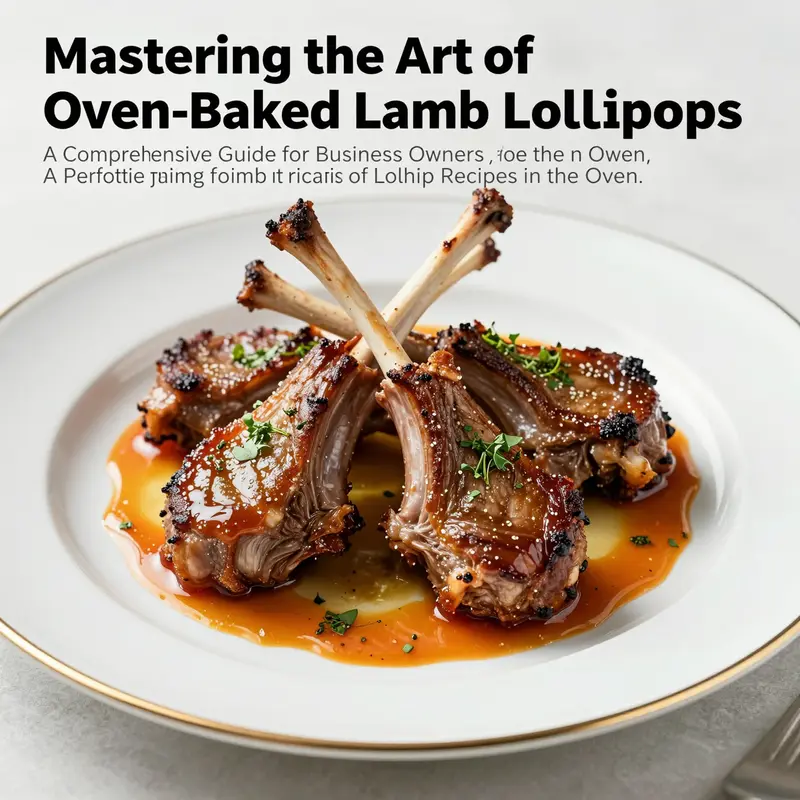
In the culinary world, lamb lollipops stand as a symbol of flavorful sophistication. For business owners in the food industry, mastering an oven-baked lamb lollipop recipe can elevate a menu, impress clientele, and enhance the overall dining experience. This article delves into essential aspects of selecting the right cuts and mastering cooking techniques specific to lamb lollipops, ensuring not only flavor but also top-notch presentation and quality. Each chapter provides critical insights that collectively form a complete understanding of preparing these exquisite oven-baked delights.
From Frenched Rib to Oven-Roasted Lollipops: Selecting and Preparing Lamb for the Perfect Oven
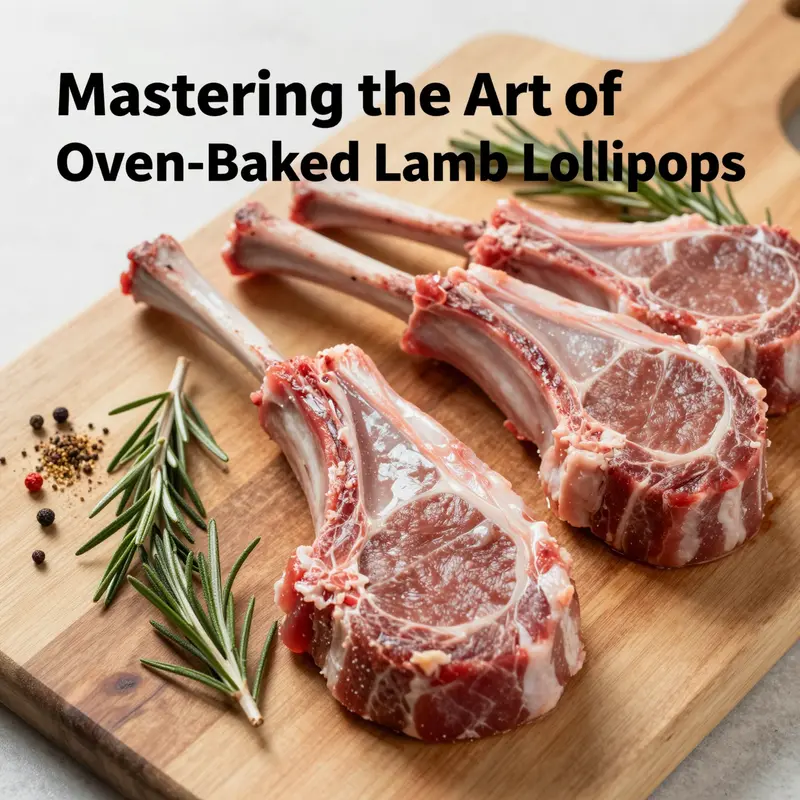
Selecting and preparing the cuts for an oven-roasted lamb lollipop begins with a choice that honors the cut’s natural tenderness and the drama of its presentation. The rib chops, known affectionately as lollipop chops, come from the lamb’s rib section and carry a slender bone that remains Frenched—a clean, exposed bone end that visually echoes a lollipop stick. This is not merely a matter of looks; the bone exposes a compact aerodynamic shape that helps the chop cook evenly and makes handling effortless at the table. The inherent marbling—the fine web of fat threaded through the muscle—plays a crucial role when heat begins to work its magic. In the oven, where a steady, controlled environment allows the fat to render gradually, that marbling melts and bastes the meat internally, contributing to juiciness and depth of flavor. Loin chops share a similar tenderness but lean toward a meatier bite with a slightly firmer texture, while shoulder or blade chops carry more connective tissue. For the dramatic, refined result intended for an oven finish, rib chops provide a balance that’s hard to beat. They hold their shape, achieve a beautiful crust with the Maillard reaction, and maintain juiciness without extended braising. When a chop has uniform thickness—ideally between one and one and a half inches—it ensures a consistent level of doneness from edge to center, a critical factor when you’re aiming for a precise medium-rare finish. The frenched bone should be clean and well-trimmed; tidy presentation invites not only a satisfying bite but a clean slice through the meat’s interior as you plate. To see a classic example of this cut in its purest form, many home cooks and professionals alike point to the lamb lollipops profile available on the dedicated resources for this cut, which showcases the characteristic bone and meat balance that makes oven roasting so reliable for this cut. For readers who want to visualize the cut before cooking, a quick reference to the traditional lamb-lollipops presentation can be found here: lamb-lollipops. Even with a strong preference for rib chops, it’s worth acknowledging that other cuts exist and can be adapted for oven roasting. Loin chops offer a meatier bite and slightly leaner texture, which makes them excellent when you want a more robust, almost beefy character in the finished dish. Their thickness can vary, so the same attention to uniformity matters. Shoulder chops, in contrast, have more connective tissue and benefit greatly from slower, lower-heat methods or even a before-roast braise to coax tenderness. While they can be delicious, they diverge from the crisp, quick-oven approach that defines the lamb lollipop’s signature experience. The choice of cut is the first moment where technique and flavor potential align. The right chop respects both the science of searing and the artistry of roasting, enabling a crust that is deeply caramelized and a center that remains juicy enough to cut with ease. In the oven, this balance is achieved not by a single step but by a choreography of preparation that begins well before heat meets meat. The best results hinge on how the meat is seasoned, dried, and brought to room temperature, because these preliminary decisions shape every subsequent reaction. The journey from raw chop to plated entrée is a sequence in which tempering, dryness, and flavor pairing converge to create a chorus of textures and aromas that define a successful lamb lollipop roast. The rib chop’s fat distribution is a natural ally here: during a brief, hot sear the surface caramelizes, forming a crust that locks in juices while a modest amount of intramuscular fat continues to render as the chops finish their journey in the oven. The outcome is a process built on precision, not guesswork, where the quality of the cut and the care in preparation become the determining factors in tenderness, succulence, and the depth of aroma. The result is not merely a meal but an experience, one that invites guests to appreciate the contrast between the crisp exterior and the tender, rosy interior that earns its place in a refined weeknight dinner or a celebratory table alike. In pursuing this approach, the goal remains simple and exacting: a chop that browns evenly, stays juicy, and delivers aromatic notes that echo the herbs and spices used in the rub. The gentle balance of fat and meat in rib lollipops makes them particularly forgiving if a slight variance in thickness exists, a helpful reality for many home cooks who select chops at a market with natural variation. The oven finish then becomes a controlled extension of the sear, a final act that completes the crust’s development while preserving the interior’s tenderness. Even with this forgiving characteristic, the technique rewards consistency. A plan that accommodates 1 to 1.5 inches of thickness is easier to manage, and a measured approach to temperature and timing keeps the texture from hardening or drying. The recipe’s soul, after all, lies in the way heat transforms fat and muscle, turning raw potential into something lush and memorable. The selection process, therefore, is not a step but a philosophy: it’s the decision to honor the chop’s natural strengths by choosing a cut whose marbling promises moisture, whose bone structure supports even cooking, and whose frenched presentation invites a confident, precise, and graceful dining moment. With the right cut in hand, preparation becomes a dialogue between surface and interior, a conversation that starts with salt and ends with a rested, flavorful crust ready to be enjoyed. The following are practical reminders that keep this conversation coherent and productive. First, always look for even thickness. A chop that varies more than a quarter of an inch from one end to the other will cook unevenly, risking a crust that overdevelops on the outside while the center remains underdone. Second, examine the frenched bone for cleanliness. A well-trimmed bone not only looks elegant but reduces the risk of gnawing at fat-laden drips that can burn and impart bitterness. Third, let marbling be your guide. Visible intramuscular fat means you’re setting yourself up for a juicy finish; the fat melts as the meat’s proteins contract, bathing the muscle fibers and preserving moisture. Finally, while rib chops are the preferred choice for oven roasting, you can carry forward a nuanced approach to seasoning that respects the cut’s richness. The rest of this chapter will walk you through how to prepare the chosen chop, how to lay in flavor without overpowering the meat’s natural sweetness, and how to time every stage so the oven does not overdo the meat. In the end, your lamb lollipop becomes a study in restraint and precision: a crusted exterior that offers a fragrant bite and an interior that yields to the fork with a small, satisfying resistance. The preparation phase is where technique and intention meet, and it is where you set the table for a verdict that is as much about technique as it is about taste. The preparation choices—seasoning in advance, the application of a dry rub, and a brief let-rest before heat—are not arbitrary. They reflect a philosophy that values texture, aroma, and the interplay of fat and lean. By salting in advance, you give the meat the chance to reabsorb moisture while seasoning the interior; by dry rubbing, you create a surface that will brown evenly; by allowing a short rest at room temperature, you bring the meat toward a uniform temperature that reduces the temperature gradient when it meets the hot pan or hot oven. These steps are small but powerful. They set the stage for searing and roasting to unfold in harmony, rather than at cross purposes. In this light, selecting and preparing the cut is not a mere shopping or trimming exercise; it becomes the foundation upon which the meal’s texture, aroma, and flavor are built. The oven then takes over, executing the plan with dependable warmth and steady time. The sizzle of the sear is the prelude to a restrained, controlled roast that finishes at a target internal temperature with minimal drama. The goal is to reach about 130 to 135 degrees Fahrenheit for a juicy medium-rare center, a range that permits the intramuscular fat to contribute sweetness and the muscle to remain tender rather than tough. Resting for five to ten minutes after roasting is not an optional flourish but a crucial phase that allows juices to redistribute, ensuring each bite delivers moisture rather than a rush of fat and hot protein. The kitchen becomes an arena where patience, precision, and respect for the cut converge to yield a lamb lollipop that is both striking in presentation and deeply satisfying on the palate. Finally, consider the sauce and a light lemon-herb finish that can accompany the chops without overshadowing the meat’s intrinsic flavor. A simple pan sauce built from the drippings, a splash of lemon juice, and a handful of fresh herbs can lift the dish to a higher plane, adding brightness and a touch of acidity that harmonizes with the lamb’s fat and the rub’s aromatics. This finishing touch is optional but highly recommended, not as a separate flavor element, but as a companion that binds the bites together. It is the kind of nuance that distinguishes a well-executed weekday dinner from a memorable special-occasion plate. The preparation philosophy thus extends beyond the mere mechanics of salt, rub, sear, and roast. It becomes an approach to cooking that honors the lamb’s natural character while using technique to unlock its full potential. When you select rib chops with generous marbling, trim the bone cleanly, apply a thoughtful rub, season in advance, and then sear before finishing in the oven, you are choosing a path that consistently yields a tender, juicy, and flavorful outcome. The process is robust but forgiving, anchored in simple ingredients and disciplined timing. It is also a reminder that great cooking often resides in the fidelity to a few, well-chosen steps performed with care. This approach aligns with the broader conversation about lamb preparation, offering a reliable method that home cooks can repeat with confidence and pride. For readers seeking further guidance on technique and flavor balance in lamb, broader culinary resources emphasize the value of searing as a means of building depth and the role of resting as a critical step in maintaining juiciness. The principles described here—careful cut selection, advance salting, dry rubbing, precise searing, controlled oven finishing, and mindful resting—form a cohesive framework that translates well beyond the plate. As you embrace this method, you’ll notice the differences in texture and aroma that make lamb lollipops especially compelling when roasted in the oven. The bite is not simply meat; it is history, science, and craft coming together in a single, elegant mouthful. If you want a concise reference that reinforces the technique with professional insights, a reputable resource on lamb chop searing and roasting offers tips on achieving a perfect crust, managing heat, and balancing seasoning. It complements the steps outlined here by validating the importance of initial sear, temperature control, and timing. External resource: https://www.culinaryinstitute.com/recipes/lamb-chop-searing-and-roasting-tips
Precision in the Oven: Techniques and Temperature Mastery for Juicy Lamb Lollipops
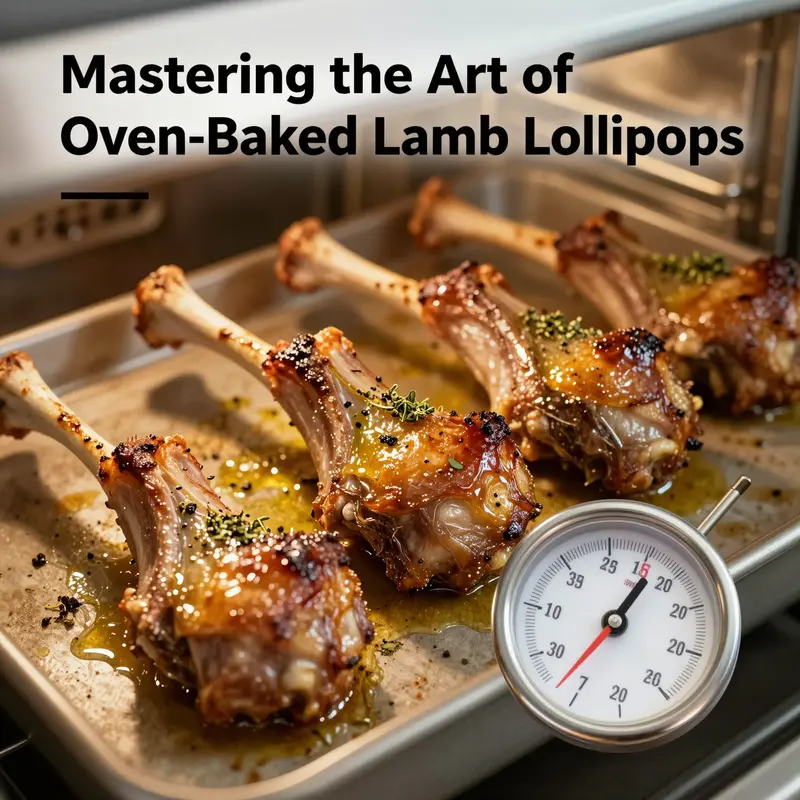
The allure of lamb lollipops lies in their elegant simplicity and the way a few precise strokes of heat can turn a humble rib chop into a succulent, deeply flavored centerpiece. Oven baking, when executed with deliberate technique, rewards patience with a crust that crackles, a center that stays pink and tender, and a perfume of herbs that lingers at the table. This chapter centers on those exacting methods—the decisions that begin with selecting the right cut, pass through the dry surface preparation and the patient development of Maillard crust, and culminate in a finished chop that remains juicy under a blistering crust. In this approach, the oven becomes a controlled stage where timing, temperature, and resting converge to deliver consistent results, something that grilling, while delicious, can struggle to match for even doneness and moisture retention in a dorm-room kitchen or a bustling weeknight kitchen alike. The goal is not merely to cook lamb, but to coax a precise balance of crust and tenderness through temperature mastery and restrained, purposeful technique. With careful attention, rib chops—often called lamb lollipops because of their central bone and festive presentation—and loin chops emerge as ideal vehicles for oven roasting; shoulder chops, which harbor more connective tissue, benefit from slow braising rather than quick roasting. The choice matters, and the textural payoff justifies the preference for the former two cuts when the oven is the chosen method.
The starting point is selection. Not all chops are created equal when heat hits them. Rib chops offer a tender bite with a marbled interior and a central bone that makes the meat easier to handle while roasting. Loin chops, by contrast, present a slightly meatier bite yet still finish with a delicate tenderness and a favorable fat distribution that helps the surface brown evenly. Shoulder chops tend toward a tougher texture, their connective tissue resisting rapid oven roasting and best suited to longer, slower methods. When scanning for chops, look for bright pink meat with creamy white fat, a color combination that suggests youthful freshness and adequate intramuscular fat. Grayish hues or yellowish fat often signal age, storage issues, or prolonged exposure to air, all of which can hinder browning and moisture retention. These visual cues translate into flavor and juiciness once heat finally arrives.
Preparation begins to set the stage long before heat is applied. The surface of the chop must be dry to coax a robust Maillard reaction, the chemical ballet that yields crust, aroma, and flavor. Pat the chops thoroughly with paper towels until the surface is free of moisture. A dry surface is a stubborn ally to browning; moisture on the surface acts like a barrier to the rapid browning that creates that essential crust. With the surface prepared, the seasoning strategy follows. Generous salting is the core technique—the classic practice of salting in advance. For best results, salt the chops 45 minutes to as long as 24 hours before cooking. The science behind this patience is simple and powerful: salt initially draws out moisture, but over time it reabsorbs into the meat, seasoning the interior and improving moisture retention during cooking. The effect is twofold: a seasoned interior and a juicier finish, because the meat holds onto its own juices more effectively through the cooking process.
A thoughtful spice rub then enhances without masking the lamb’s character. A simple blend—garlic powder for a subtle aromatization, fresh rosemary for piney lift, cracked black pepper for heat and texture, and a touch of smoked paprika for warmth and color—pairs beautifully with the lamb’s natural sweetness. A light drizzle of olive oil helps the spices adhere and contributes to even browning across the surface. It’s not about an overpowering spice scheme; it’s about a complement that allows the lamb’s own flavor to shine while giving the crust a satisfying depth.
“Salt your lamb early—it transforms both texture and taste. Chops seasoned 12 hours ahead are consistently juicier than those salted just before cooking.” The sentiment, attributed to Chef Marcus Hale, a culinary instructor at Alpine Culinary Academy (message dated March 7, 2026), echoes the frontier between technique and flavor. The life of the recipe is not only in the spices but in the timing and the way salt works its quiet magic through the meat. This perspective sits at the heart of the method: patience yields juiciness, and juiciness makes room for a crust that’s both crisp and deeply flavored.
With the chops seasoned and the surface dry, the oven becomes the arena for controlled, high-heat cooking. Preheating to 425°F (220°C) is a deliberate choice; it guarantees a vibrant start that seals in juices and constructs a crust quickly while the interior remains tender. The recommended setup is practical and repeatable: place the chops on a wire rack set over a baking sheet or, for a direct sear-to-oven approach, in a well-seasoned cast-iron skillet. The rack encourages air circulation, promoting even browning around the entire circumference of each chop, while a skillet can coax an even deeper initial crust on the stovetop before finishing in the oven.
The two-step cooking process is the hinge of the technique. First, sear the chops in a hot skillet for 2–3 minutes per side. This short, intense contact with heat is designed to develop a rich, caramelized exterior—the Maillard reaction in full bloom. The goal is a crust that tastes of roasted garlic, rosemary, and hidden notes of the paprika’s sweetness, not a pale surface that betrays insufficient browning. After the crust forms, transfer the chops to the preheated oven to finish cooking. The finishing time is modest but consequential: about 5–8 minutes, depending on thickness and desired level of doneness. The internal temperature target for medium-rare is a precise 130–135°F (54–57°C). A meat thermometer is the reliable companion here, ensuring that the center remains pink and juicy and that the edge-to-edge gradient stays balanced rather than marching toward dryness.
Thickness matters, and so does the carryover effect. The moment the chops leave the oven, their internal temperature continues to rise as residual heat absorbs and redistributes. This carryover cooking is why many chefs advocate removing the meat when it is a few degrees below the final target. In practice, remove the chops when they’re about 5°F below the goal; they will rest and rise to the perfect doneness while juices reabsorb into the meat. Resting for 5–10 minutes is essential. The carryover effect is part science, part patience, and part the ultimate test of discipline: do not carve too soon. The rest period lets the juices, which have been driven toward the center during initial cooking, relax and reequalize. When you cut in, you’ll notice that the juices stay where they belong—within the meat—rather than spilling onto the plate.
This chapter’s method also includes practical steps for guiding flavor through the cooking by way of a simple pan sauce drawn from the drippings. After the sear and oven finish, the pan will hold a small amount of fond—the browned bits left behind by the chops. A quick deglazing with lemon juice introduces brightness, and a handful of fresh herbs—rosemary or thyme, perhaps, along with a whisper of their lemony counterparts—contributes a final lift. The sauce is not a heavy addition but a cohesive accompaniment that complements the lamb’s natural meatiness and the spice rub’s warmth. A few starches from the browning of the pan mingle with the citrus, creating a glossy, lightly tangy finish that echoes across the plate. This is not a separate course; it’s a kiss of brightness that carries the dish from the warm crust to the table with a unified flavor profile.
The guidance here extends beyond the simple recipe card. It’s a philosophy of precision: preheat thoroughly, pat dry, salt early, sear deeply, roast briefly, rest patiently, and finish with a bright, balanced sauce. Temperature management is not a peripheral concern; it is the central discipline that makes the difference between a good lamb chop and a remarkable one. In many test kitchens, the thermometer becomes a chef’s most trusted ally, guiding decisions when time or thickness introduces variables. The principle holds whether you’re cooking rib chops or loin chops. It’s the same method—two steps to crust and courage, then a careful finish to preserve moisture and flavor.
An important architectural note ties the practical method to the broader body of knowledge. When you reference robust guides on oven-baking techniques and temperature control for lamb lollipops, you’ll encounter a range of tested methods that emphasize consistent results across different cuts and kitchen setups. In practice, the approach presented here remains faithful to the fundamentals: a high-heat start, a short, controlled finish, and a mindful rest. The chosen cuts—the rib lollipop and loin chop—are ideally suited for this style because they carry the right balance of fat and meat to survive the high heat without turning the interior into a pale, gray mass. Shoulder chops, with their more pronounced connective tissue, do not respond as well to a brief oven finish; they require longer braising or slow-roasting to tenderize in the same way. This is the kitchen logic that underpins the recipe’s structure and informs the timing and method that follow.
For readers seeking additional context or validation, the New York Times Cooking guide on oven-baked lamb chops provides a professional perspective on temperature management and timing. The article, published in 2026, offers expert-tested methods and visual cues that complement the approach described here. See the external resource for a broader view of how precise temperature control translates into reliable doneness and juicy, evenly cooked meat: https://www.nytimes.com/2026/03/07/dining/lamb-chops-oven-bake-temperature-guide.html
Throughout this chapter, the underlying thread remains clear: the oven is not merely a heat source; it is a technology for control. The method above is designed to transform the inherently democratic lamb chop—simple yet capable of extraordinary flavor—into a consistently excellent dish. The two steps to browning, the measured finish, and the patient rest create a dining experience that feels refined without being fussy. The technique respects the meat, honors the ingredients, and makes the most of the lamb’s natural sweetness and marbling.
In practice, a single sentence can summarize the execution: sear for crust, roast for tenderness, rest for juiciness, and sauce for brightness. The rhythm is simple, but its effect is profound. If you’re looking for a comparable exploration of lamb lollipops in a home kitchen context, the technique aligns closely with the broader guidance on lamb lollipops in trusted culinary resources, such as the detailed guide posted on a well-regarded recipe site dedicated to meat preparations. For a direct, practical starting point, consider visiting the dedicated lamb lollipops page for a concise precedent and additional tips that reinforce the core approach described here. lamb lollipops.
As you move from word to word and measure to measure, remember: precision is flavor’s best ally. The crust’s aroma, the interior’s rosy glow, and the glossy, bright finish will reward you with a dish that feels both familiar and newly minted each time you cook it. The oven’s quiet heat, when wielded with confidence, can turn a simple dinner into an occasion—one that your guests may remember as a testament to how a few careful decisions, repeated with discipline, yield something transcendent. The lamb lollipop, with its central bone and its intimate relationship to the fat that bastes during roasting, rewards patience and attentiveness as much as it rewards heat.
External resource: https://www.nytimes.com/2026/03/07/dining/lamb-chops-oven-bake-temperature-guide.html
Final thoughts
Successfully executing an oven-baked lamb lollipop recipe is a valuable skill for any food business owner. By thoughtfully selecting quality cuts and mastering precise cooking techniques, you create a dish that is not just a meal, but an experience. The careful attention to seasoning and cooking temperature can greatly impact flavor and texture. Armed with the insights from this guide, you are now better equipped to enhance your culinary offerings and delight your patrons with perfectly succulent lamb lollipops that leave a lasting impression.