

In a world where reducing food waste is essential, making chicken soup from leftover rotisserie chicken presents an excellent opportunity for business owners to create hearty, nutritious meals with minimal effort. This method not only optimizes resources but also resonates with the growing consumer demand for mindful cooking practices. The following chapters will guide you through a step-by-step process for making this comforting dish, explore its nutritional benefits, and present creative variations that will cater to diverse customer preferences. Embrace this efficient rescue cooking technique to enhance your offering and delight your clientele.
Rescuing Flavor: Turning Leftover Rotisserie Chicken into a Cozy, Nourishing Soup

When a rotisserie chicken rests in the fridge, the best use of its memory is often a comforting bowl that proves leftovers can become something richer. This chapter follows a simple plan: honor the roast, then coax that work into a soup that feels like a hug. Start by removing the meat from the bones and shredding it into bite-sized pieces. The bones and skin hold depth; keep them to build a flavorful stock. Simmer the bones in cold water with a sliced onion, a couple of chopped carrots, celery, a few garlic cloves, and a bay leaf. A gentle simmer for 1 to 1.5 hours draws out collagen and minerals without clouding the liquid. Strain and return the clear stock to the pot, then add the shredded chicken. Taste and adjust salt carefully, since rotisserie chickens can be salty. Finish with lemon zest or fresh herbs to brighten. Add vegetables such as peas, corn, or diced potatoes in the last 10 to 15 minutes for color and texture. If you like starches, noodles or rice can be cooked directly in the simmering soup, but monitor liquid levels. A final garnish of parsley or dill and a small dollop of sour cream or a grating of Parmesan can be offered on the side. This approach turns leftovers into a nourishing, flexible soup that can anchor weeknights and leftovers alike.
From Carved Bits to Nourishing Broth: The Nutritional Power of Chicken Soup from Leftover Rotisserie Chicken
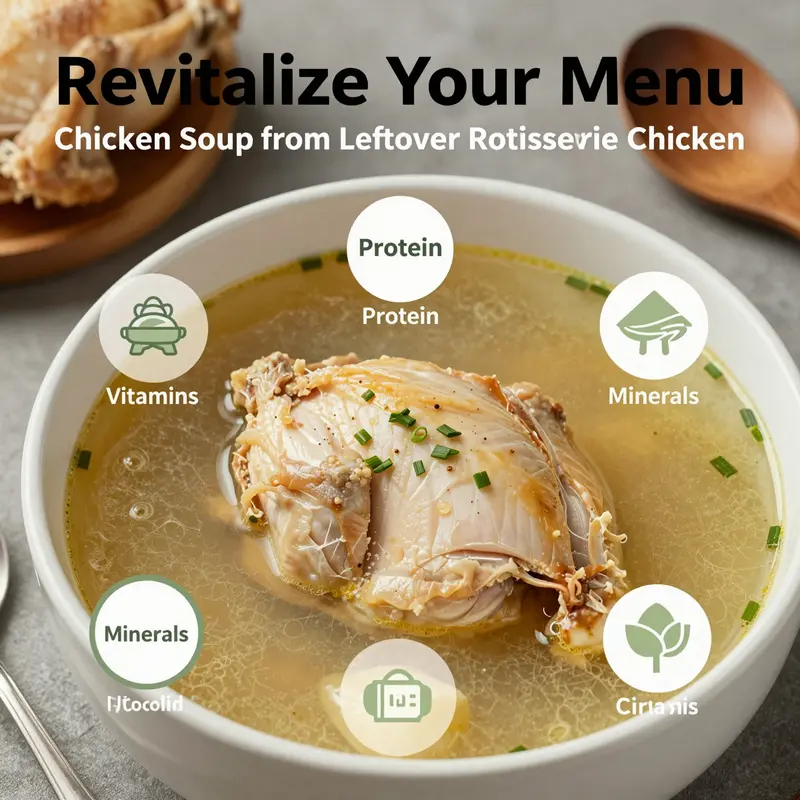
When a rotisserie bird becomes a second act, the kitchen becomes a studio for nourishment. The goal isn’t to disguise waste but to extract the quiet depth already built into that bird—the caramelized skin, the tender meat, the whisper of aromatics that seasoned the roast. Turning leftovers into soup is a practical form of rescue cooking, where a pot of broth evolves into a warm, comforting meal in under an hour. In this method, the bones and bones’ remnants are not discarded; they are invited back into the frame to contribute minerals and gelatin, while the meat offers ready protein. The result is not a pale stock from a carton, but a broth with backbone, flavor, and a sense of home.
Protein is the backbone. The white and dark meat from a rotisserie bird provides high-quality protein, supplying essential amino acids that support muscle repair, satiety, and daily energy. Even after a day of sitting, the meat still delivers meaningful amounts of protein per serving. In a soup, those proteins mingle with the broth to sustain fullness longer than a simple mug of stock. The leftover meat doesn’t just float in liquid; it revives as bite-sized inclusions that keep the dish satisfying while cooling the urge to reach for extra snacks.
The bones, simmered slowly, release collagen, a connective tissue protein that becomes gelatin when cooled. A broth built from simmered bones carries this gelatin, which can soften into a silky mouthfeel and deliver potential benefits beyond flavor. Gelatin and collagen are linked to joint health, and they are thought to support gut lining integrity. This isn’t a rigid medical claim, but many cooks note improved comfort in the digestive tract after a bowl that includes a generous spoon of broth. The same gelatin helps hydrate the body, as it absorbs water and contributes to a sense of moisture that can ease throat and nasal dryness during illness.
As the pot simmers, minerals are drawn from the bones—calcium for bone maintenance, magnesium for muscle function, phosphorus for energy metabolism. The longer the simmer, the richer the mineral profile becomes, especially when you use the bones directly from the rotisserie chicken. The liquid becomes a microcosm of micronutrients that support countless bodily systems. When you ladle this broth over whole grains, pasta, or greens, you’re pairing macronutrient density with a broader spectrum of vitamins and minerals that can support immune function and overall resilience.
Vegetables matter just as much as meat and bone. Aromatics like onions, carrots, and celery form a flavorful base, while leafy greens or herbs add color and micronutrients. Carrots bring beta-carotene, onions contribute quercetin and sulfur compounds, and celery adds trace minerals with the aromatic lift of a bay leaf or a sprig of thyme. The vegetables supply vitamins A, C, and K, plus fiber and antioxidants that help manage inflammation and support hydration. In a well-balanced bowl, the vegetables aren’t optional garnish; they are active contributors to the soup’s nutritional density, texture, and brightness. This synergy is why a simple leftover rotisserie chicken soup can feel nourishing in a way that boxed broth seldom does.
The science behind chicken soup’s comfort has been explored in accessible sources that describe how broth can ease respiratory symptoms by reducing neutrophil migration and aiding mucus clearance. A bowl that looks and tastes like real food signals to the body that it’s time to rest and rebuild, a small but meaningful boost when recovery is needed. Hydration is built into the act of eating warm soup, and the minerals, gelatin, and protein together support a steady energy level without heaviness. For someone managing a cold or a rough week, a pot of leftover-rotisserie-chicken soup is less indulgence and more reliable nourishment.
Beyond flavor and nourishment, this approach dovetails with weekly meal planning and dietary considerations. Leftover rotisserie chicken soup lends itself to gluten-free or paleo contexts when you choose rice or gluten-containing pasta accordingly. For those watching sodium, you can start with a low-sodium broth base and season gradually, tasting as you go so the final dish remains balanced without becoming harsh. If you’re keen on lighter options, finish with a squeeze of lemon and a handful of leafy greens to brighten the palate without bloating. In more robust iterations, add egg noodles, barley, or even a splash of cream to create a heartier, more comforting bowl that still centers the chicken and vegetables. The method is forgiving: if you overcook the vegetables, you’ll still have a nourishing broth; if you oversalt, you can dilute with more water or a splash of unsalted stock. The aim is consistent nourishment, with flexibility to fit different lifestyles, from busy parents to solo meal preppers.
For readers seeking a broader range of leftovers ideas, you can explore more in the collection of Leftover Rotisserie Chicken Recipes.
External resource: Healthline article on the healing properties of chicken soup: https://www.healthline.com/nutrition/chicken-soup-health-benefits. In practice, this simple broth becomes a reliable weekly ritual that nourishes body and reduces waste. This approach invites experimentation and personal tasting to discover what nourishes you.
From Shreds to Comfort: Creative Chicken Soup Variations Using Leftover Rotisserie Chicken

The act of rescue cooking takes on a warm, almost ritual quality when the centerpiece is a leftover rotisserie chicken. What began as a roasted centerpiece with caramelized skin and succulent meat becomes the foundation for a dozen comforting bowls, each with a distinct personality. The beauty lies in harnessing the flavors already blossomed on the bird—the savory depth of the skin, the tender morsels that cling to the bone, and the lingering notes of herbs and peppery seasoning. Building a soup around these elements transforms a convenience staple into something nourishing and homey, a dish that invites you to listen to what your fridge has to offer rather than chase new ingredients. The method remains simple: a gentle sauté of aromatics to wake the flavor, a liquid that gathers and carries every fragment of essence, and the shredded chicken stirred back in to mingle with herbs, citrus, and heat. In under an hour, the kitchen becomes a studio where leftovers become a soul-warming bowl of soup.
The first step is often the hardest to articulate yet the easiest to execute: coax flavor from the aromatics without browning them to bitterness. Onions, garlic, and celery form a classic trio, a soffritto that lays the foundation. A light touch of olive oil in a sturdy pot allows the vegetables to release their sweetness and perfume the air. Once translucent, the scene expands to include the shredded rotisserie chicken, a handful of beans in some recipes, or a squeeze of lemon in others. The broth, whether water, store-bought low-sodium stock, or a repurposed chicken-bone base from the rotisserie itself, becomes the vehicle that carries all these notes toward a harmonious finish. Salt and pepper are the guiding stars, but the real magic comes from balance: a bright citrus zing here, a creamy richness there, or a whisper of spice that keeps the spoon lingering at the lips. These bowls honor the idea that good taste does not require endless simmering; it requires attentive building, a touch of curiosity, and a willingness to let the leftovers strut their stuff.
Among the many directions this concept can take, five variations stand out for their range of flavors and textures, each designed to suit different moods and dietary preferences while remaining faithful to the core technique. The first variation leans into richness without sacrificing brightness: a Creamy Tuscan Chicken & White Bean Soup. Imagine onions and garlic meeting celery in a glistening pot, then being joined by diced rotisserie chicken and creamy white beans that soak up the savory broth. A generous pour of low-sodium stock lets the dish breathe, while a splash of heavy cream or coconut milk adds lushness. Fresh thyme drapes the pot with a garden note, and a final hit of lemon juice brightens every mouthful. A grating of Parmesan crowns the bowl, lending both saltiness and a nuttiness that echoes the cheese on a crusty loaf. The result is a rich, hearty soup that still feels clean enough to enjoy with a simple salad on the side. For those seeking a robust but familiar comfort, this variation hits the mark and demonstrates how a few pantry staples can transform leftovers into a creamy, satisfying meal. To explore more ideas built around this approach, you can check out the broader collection of Leftover Rotisserie Chicken Recipes.
A second option pushes into bold, contrasting flavors with a Spicy Thai Coconut Chicken Soup. Here, the broth drawn from the rotisserie chicken mingles with coconut milk to create a silky base that carries heat and fragrance in equal measure. Fish sauce adds an unassuming saltiness, while lime juice slices through the richness with a sharp brightness. Red curry paste brings the heat, balanced by green onions and cilantro that wake up the aroma just before serving. Shredded rotisserie chicken folds into the pot against a backdrop of aromatics and a touch of citrus. The finish—another squeeze of lime and a handful of fresh herbs—delivers a meal that feels adventurous yet comforting. In this bowl, the refrigerator’s cast-offs become a passport to an island-inspired soup that still lands in the comfort-food territory you crave on a chilly evening.
The third variation channels brightness and balance with a Mediterranean Lemon-Herb Chicken Soup. Start with the same foundation of onions and garlic, then invite chopped rotisserie chicken, diced tomatoes, and spinach or kale to join the mix. A generous pour of chicken broth carries oregano, thyme, and the sunshine of lemon zest throughout. A final touch of lemon juice deepens the flavor, while a dollop of plain yogurt or crumbled feta provides a tangy, creamy contrast that elevates the dish without heaviness. This version feels like a bright sunny day in a bowl, ideal for those who want a wholesome, nourishing soup that won’t overwhelm with richness. It’s naturally gluten-free and adaptable to light or bold dietary preferences.
A fourth avenue is a Southwestern Chicken & Corn Chowder that offers warmth in both spice and texture. Sautéed onions, bell peppers, and jalapeños form a fragrant base, then cubed rotisserie chicken, corn kernels, and black beans arrive with cumin and chili powder. The broth thickens as the ingredients mingle, and a final swirl of sour cream adds a silky finish. Avocado slices on top bring cool, creamy contrast to the heat and corn sweetness, creating a balanced bowl that sticks to the ribs on a cold night. This variation celebrates the versatility of leftovers by weaving in beans and corn—two pantry staples that stretch a single rotisserie chicken into multiple meals while keeping the comfort factor high.
The fifth option, an Asian-Inspired Ginger-Soy Noodle Soup, keeps things light and savory. A quick sauté of minced ginger and garlic opens the door to a pot where shredded rotisserie chicken and broth meet cooked noodles—rice noodles or soba both work well. A splash of soy sauce and a drizzle of sesame oil give the bowl an umami backbone, while green onions and cilantro finish with a fresh lift. The noodles bring a satisfying bite, and the overall texture remains bright and clean, perfect for a weeknight when you want something soothing yet not heavy. The beauty of this variation is its speed and its ability to be tailored with whatever greens or herbs you have on hand, making it an easy nightly staple.
These variations demonstrate how flexible a single leftover rotisserie chicken can be when treated with care. You begin with a simple, flavorful base and end with a spectrum of bowls—from creamy and rich to tangy, bright, and boldly spiced. Each version respects the original technique while inviting personal twists, ensuring there is a match for every palate and every moment. The practice of rescue cooking becomes not just a method but a mindset: waste becomes value, time becomes flavor, and dinner becomes a little ceremony of nourishment. If you’re exploring these ideas further, remember that the most important ingredient is the sense that you are crafting something thoughtful from what you already have. By listening to your pantry and your appetite, you can season leftovers into nourishment that feels almost novel, even when the star remains an ordinary rotisserie bird.
External resource for broader context on safe handling and flavorful stock can be found at a reputable food-safety information site to complement these techniques: https://www.fda.gov/food-safety.
Final thoughts
Incorporating chicken soup made from leftover rotisserie chicken into your menu not only minimizes waste but also satisfies consumers’ desires for hearty and healthful meals. This approach not only highlights sustainability but also enables you to diversify your offerings with minimal resources. Embrace this trend and watch as customers appreciate your commitment to mindful cooking and innovative dish creation. Turn leftover rotisserie chicken into a star of the show, providing comfort and nourishment to all who enjoy it.